Why Austin Luxury Homes Sit on the Market in 2026 — And How Smart Sellers Avoid It
Austin’s luxury housing market in 2026 doesn’t behave like the boom years that defined the early 2020s. Back then, high-end homes often sparked bidding wars within days, sometimes hours. Today, the same properties can linger for weeks or even months without serious offers. That shift surprises many sellers who still expect yesterday’s momentum in a market that has fundamentally changed its rhythm.
The reality is not that Austin luxury homes have lost value as a category, but that buyer psychology, inventory levels, and pricing expectations have all evolved at once. When multiple forces shift together, the friction shows up first in the luxury segment. High-end buyers are more selective, more data-driven, and significantly less emotional than during peak frenzy periods. They are not rushing decisions; they are comparing alternatives across multiple neighborhoods, states, and even countries.
At the same time, sellers often enter the market anchored to peak-era pricing memories. That creates a subtle but powerful disconnect between perceived value and actual buyer willingness. Add rising carrying costs, increased inventory in select luxury pockets, and stricter lending conditions for jumbo loans, and the result is predictable: longer days on market.
Yet not all sellers struggle. A smaller group consistently sells quickly and close to asking price. Their advantage isn’t luck—it’s strategy. They understand how luxury buyers in Austin now think, what they prioritize, and how to position a property so it feels like an opportunity rather than an overpriced listing. That difference is what separates stale listings from successful exits in 2026.
To understand why some homes sit and others move, you need to look deeper into the structure of today’s market.
Market Snapshot 2026
Austin’s luxury market in 2026 is best described as “selectively active.” That means transactions are still happening, but they are not evenly distributed across price tiers, neighborhoods, or property types. Instead of a broad rising tide lifting all listings, the market has segmented into micro-markets where performance varies dramatically depending on positioning, condition, and pricing precision.
One of the most important shifts is the increase in available inventory at the top end. More high-end homes are sitting on the market simultaneously, giving buyers more leverage than they’ve had in years. When buyers have options, urgency disappears. And in luxury real estate, urgency is often the hidden force behind strong offers.
Another major factor is normalization after the pandemic-driven surge. The extraordinary demand spike of earlier years was fueled by relocation waves, low interest rates, and lifestyle migration toward Austin. By 2026, those forces have stabilized. People still move to Austin, but the pace is steadier and more rational. That means sellers can no longer rely on scarcity psychology to drive bidding wars.
Economic conditions also play a role. Even affluent buyers are more sensitive to macro uncertainty, portfolio performance, and borrowing costs tied to jumbo mortgages. While they can still afford luxury homes, they are more deliberate about timing and value perception. A property must justify itself clearly in a way it didn’t need to before.
Austin Luxury Supply Surge
One of the clearest reasons luxury homes linger longer is the steady increase in high-end inventory. Over the past few years, developers and private builders responded aggressively to Austin’s growth narrative, producing more luxury residences in Westlake, Barton Creek, Lake Austin, and high-end gated communities. That pipeline did not slow down immediately when demand normalized, creating a lag effect.
Now the market is absorbing a larger-than-usual stock of luxury properties at the same time. This creates competition not just between similar homes, but between entire lifestyle categories. A modern glass estate in Westlake might be competing indirectly with a renovated waterfront property or a downtown penthouse offering skyline views. Buyers are no longer constrained—they are curating.
This abundance changes behavior. Instead of acting quickly, buyers compare extensively. They revisit listings multiple times, wait for price adjustments, and often negotiate more aggressively than sellers expect. Homes that are not immediately compelling visually or financially tend to get pushed aside, even if they are objectively high quality.
The result is simple but impactful: more supply reduces urgency, and reduced urgency extends days on market. In luxury real estate, time itself becomes a signal. The longer a home sits, the more buyers assume there is room for negotiation, which further slows momentum.
Demand Cooling Factors
On the demand side, Austin is still attractive, but the intensity of migration has cooled compared to its peak years. Tech sector volatility, corporate relocation pacing, and remote work recalibration have all contributed to a more measured inflow of luxury buyers. People are still arriving, but they are not arriving in waves anymore.
Remote work evolution plays a particularly important role. During the height of remote flexibility, many affluent professionals relocated quickly to Austin for lifestyle advantages without needing to consider office proximity. In 2026, hybrid work expectations have tightened. Some buyers are now reassessing how often they actually need to be in Austin, which reduces urgency for immediate purchase.
Additionally, luxury buyers have become more globally aware. Instead of focusing solely on Austin, they are comparing it with other high-end markets like Miami, Scottsdale, Nashville, and select international destinations. That comparison broadens their decision-making timeline and reduces emotional pressure to commit quickly.
Even lifestyle appeal is no longer enough on its own. Buyers want measurable value, architectural distinction, energy efficiency, and long-term resale confidence. If a property doesn’t clearly check those boxes, it may remain on the market longer—not because it lacks quality, but because it fails to stand out in a more sophisticated buyer landscape.
Pricing Disconnect
Pricing is where most luxury listings in Austin begin to slow down in 2026. The issue is not simply that homes are “too expensive,” but that pricing expectations often reflect a different market reality than the one buyers are currently operating in. This gap between expectation and willingness is what creates friction, and friction creates days on market.
Many sellers still anchor their pricing to peak comparable sales from previous years, assuming those numbers reflect current value. However, luxury real estate does not move in a straight line. It reacts to sentiment, inventory shifts, and macroeconomic signals. When those conditions change, comps from even six to twelve months prior may no longer be relevant benchmarks.
Another challenge is emotional pricing. Luxury homes often carry personal meaning, and that can unconsciously influence pricing decisions. Renovations, custom architecture, and lifestyle upgrades can lead sellers to assign value that buyers do not fully share. While these features matter, buyers evaluate them through a different lens—one focused on utility, aesthetics, and market alternatives.
Overpricing Psychology
Overpricing in Austin’s luxury segment is rarely intentional in a negative sense. Instead, it is usually the result of optimism, attachment, or outdated market assumptions. Sellers often believe that “testing the market” with a higher price leaves room for negotiation, but in reality, it can quietly damage momentum from day one.
In 2026, luxury buyers are highly informed. They analyze price-per-square-foot trends, historical appreciation curves, and neighborhood-specific shifts before scheduling a showing. When a listing appears overpriced relative to perceived value, it gets filtered out mentally long before any in-person visit occurs.
This creates a silent failure point. The property doesn’t necessarily receive negative feedback—it simply gets ignored. And in real estate, invisibility is more damaging than rejection because it eliminates feedback loops that could otherwise guide adjustments.
There is also a psychological threshold effect. If a property sits too long at an inflated price, buyers begin to assume something is wrong with it. Even if nothing is structurally or aesthetically wrong, the listing develops a stigma. That stigma is difficult to reverse without a visible price correction.
Appraisal Gaps
Appraisal gaps are another hidden contributor to prolonged market time in luxury transactions. In Austin’s high-end segment, custom homes and unique architectural properties often lack perfect comparable sales. This makes valuation more complex, especially when lending is involved.
If a home is priced significantly above what appraisers are willing to support, buyers who rely on financing may hesitate. Even wealthy buyers using cash often consider resale and liquidity implications tied to appraised value. A large gap between asking price and appraised value introduces uncertainty, and uncertainty slows decisions.
This issue is amplified in rapidly evolving neighborhoods where recent sales data may not fully reflect current listing expectations. Sellers may point to aspirational comps, while lenders rely on conservative, verifiable data. That tension often leads to renegotiation or delayed closings.
Smart sellers anticipate this by aligning pricing with defensible appraisal ranges rather than emotional valuation. When pricing is grounded in what the market can verify—not just what it desires—the transaction process becomes smoother and faster. In a slower luxury market, that alignment can be the difference between a stale listing and a timely sale.
Buyer Behavior Shift
Buyer behavior in Austin’s luxury segment in 2026 has changed in ways that are subtle on the surface but powerful in effect. The most important shift is not just that buyers are more selective—it’s that they are more analytical. Emotional decision-making, which once drove quick luxury purchases, has been replaced by comparison-based evaluation across multiple markets, timelines, and lifestyle scenarios.
Luxury buyers today rarely “fall in love at first sight” and immediately act. Instead, they build mental spreadsheets of trade-offs: location vs. architecture, privacy vs. proximity, modern design vs. legacy charm. A home is no longer judged in isolation but as part of a broader portfolio of options they are actively considering. That shift alone slows down momentum because urgency is diluted across competing choices.
There is also a noticeable change in how buyers engage with listings online. Virtual tours, drone footage, and neighborhood walkthroughs have become standard expectations rather than premium features. If a listing fails to deliver a compelling digital experience, it often never reaches the in-person showing stage. That means a significant portion of “market time” is actually spent in digital invisibility rather than physical visits.
Remote Work Reversal
Remote work once acted like a turbocharger for Austin’s luxury market. It allowed high-income buyers from California, New York, and Chicago to relocate quickly without friction. That period created a surge of emotionally driven purchases—buyers chose lifestyle over logistics, and Austin benefited heavily.
In 2026, that effect has partially reversed. Hybrid work policies are now more structured, with many companies requiring at least some in-office presence. This change doesn’t eliminate relocation, but it does slow it down. Buyers are now asking harder questions before committing: How often will I actually be in Austin? Does this home still make sense if I’m traveling frequently or splitting time across cities?
That recalibration reduces urgency. Instead of rushing into purchases to escape expensive coastal markets, buyers are now optimizing for flexibility. Some even rent longer before committing to a purchase, especially in the luxury tier where carrying costs are significant. This added hesitation directly increases days on market for sellers who expect immediate absorption.
The psychological shift is important too. Austin is still desirable, but it is no longer seen as the only obvious “winner” city for relocation. That perception change reduces the emotional pressure that once pushed buyers to act quickly.Luxury Buyer Expectations
Luxury buyers in 2026 expect more than just square footage and premium finishes—they expect narrative clarity. Every high-end home must now answer a silent question: “Why this property, over every other option available to me?”
Design quality alone is no longer enough. Buyers expect architectural cohesion, energy efficiency, smart home integration, and lifestyle functionality that aligns with modern living. A beautiful home that feels impractical, outdated in flow, or poorly optimized for work-life balance can struggle even in a strong location.
There is also a heightened expectation around move-in readiness. Renovation fatigue is real in the luxury segment. Many buyers are less interested in “projects,” even if the property has upside potential. They prefer homes that feel complete, curated, and ready for immediate enjoyment.
This expectation shift creates friction for older luxury listings or homes that haven’t been recently updated. Even if structurally sound, they may be perceived as requiring effort—an invisible cost buyers factor into their decisions. That perceived effort often translates into slower offers or lower engagement overall.
Property Positioning Issues
One of the most overlooked reasons luxury homes in Austin sit longer on the market is not pricing or demand—it’s positioning. A property can be objectively beautiful, well-located, and fairly priced, yet still underperform because it fails to communicate its value clearly to the right audience.
Positioning is essentially the story a home tells before a buyer ever steps inside. In 2026, that story is delivered primarily through digital channels: listing photos, video walkthroughs, social media exposure, and agent marketing strategy. If that narrative is weak, inconsistent, or generic, the property struggles to stand out in a saturated luxury feed.
A common mistake is treating all luxury homes as interchangeable. In reality, every property appeals to a slightly different buyer archetype—tech executives, relocating families, empty nesters, international investors, or privacy-focused entrepreneurs. Without targeted positioning, marketing becomes diluted and fails to resonate deeply with any specific group.
Staging Failures
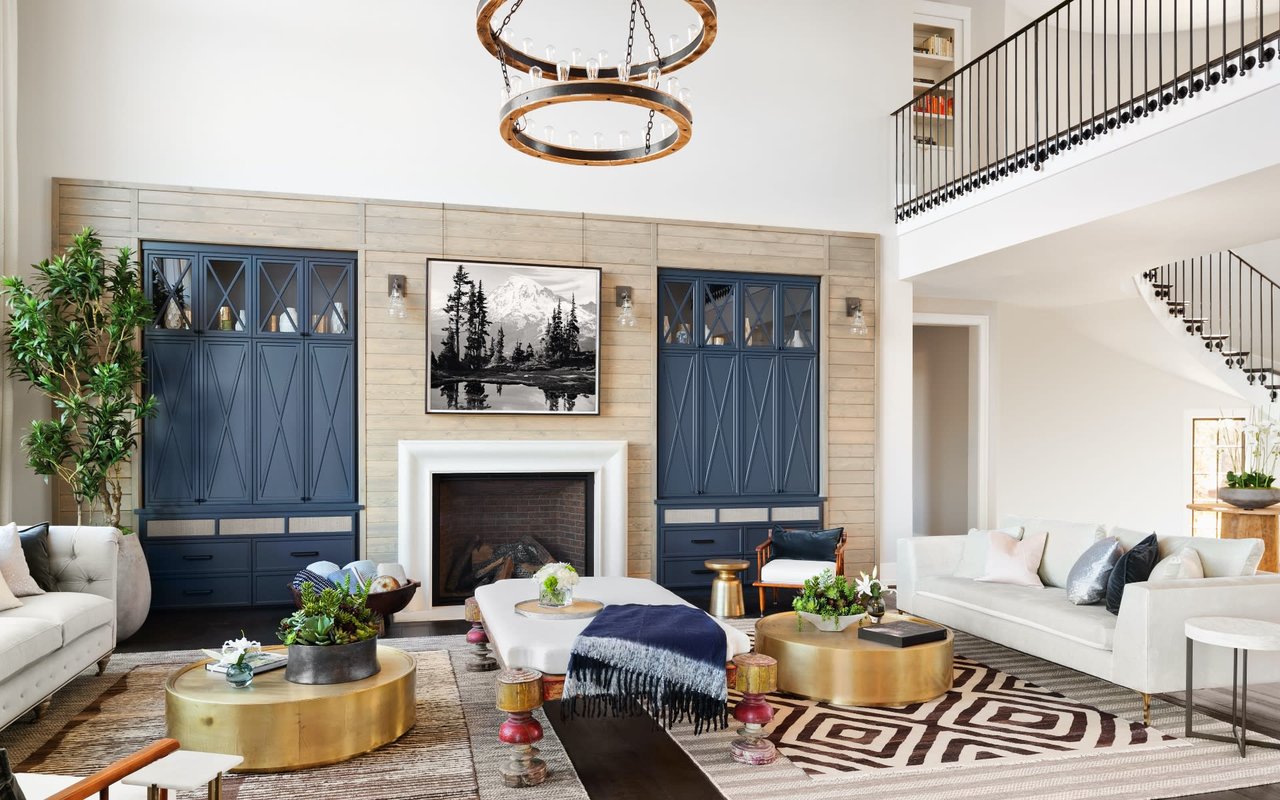
Staging is often underestimated in luxury listings, yet it plays a decisive role in how quickly a home attracts interest. Poor or outdated staging can make even high-end properties feel flat or impersonal. In contrast, thoughtful staging can transform perception, making a home feel warmer, more aspirational, and easier to emotionally connect with.
In Austin’s 2026 luxury market, buyers expect a level of visual sophistication that mirrors high-end hospitality design. Think boutique hotels, modern minimalism, and curated lifestyle spaces rather than generic furniture arrangements. If staging feels dated or overly safe, it fails to trigger emotional engagement.
Another issue is over-staging or misaligned styling. A modern architectural home staged with traditional décor can confuse buyers about the property’s identity. That mismatch weakens the overall impression and reduces memorability, which is critical in a market where buyers are viewing multiple listings per week.
Smart sellers now treat staging not as decoration but as strategic marketing. The goal is not just to make a home look “nice,” but to make it instantly understandable and desirable within seconds of viewing.
Marketing Quality Gap
Marketing quality has become a major differentiator in Austin’s luxury real estate outcomes. High-resolution visuals are no longer optional—they are the baseline. What separates fast-selling homes from stagnant ones is the sophistication of the marketing narrative.
Listings that rely only on MLS exposure or basic photography often underperform, regardless of property quality. Buyers expect cinematic video tours, aerial footage that highlights location context, and storytelling that frames the home within a lifestyle experience.
There is also a growing importance of multi-channel exposure. Luxury buyers are not only browsing real estate platforms—they are consuming content on Instagram, YouTube, and curated digital publications. If a property is not visible in those ecosystems, it loses reach among high-intent buyers.
The gap between “standard listing” and “premium marketing campaign” can easily translate into weeks or months of additional market time. In a competitive environment, visibility is velocity. The more compelling and widespread the marketing, the faster a property moves through buyer awareness into serious consideration.
Neighborhood-Specific Dynamics
Austin’s luxury market is not uniform—it behaves differently depending on the neighborhood. In 2026, micro-location dynamics play a larger role than ever in determining how long a property stays on the market. Even within the luxury tier, buyer preferences vary significantly between Westlake, Barton Creek, Lake Austin, and downtown high-rise living.
Each area has its own buyer psychology, pricing sensitivity, and inventory rhythm. A strategy that works in one neighborhood may completely fail in another. Sellers who ignore these micro-differences often misread their listing’s performance and assume broader market weakness when the issue is actually localized positioning.
The key insight is that luxury buyers are not just buying Austin—they are buying a specific version of Austin. That version shapes everything from willingness to pay to how quickly they act.
Westlake & Barton Creek Trends
Westlake and Barton Creek remain two of the strongest luxury submarkets in Austin, but even these traditionally resilient areas are experiencing longer absorption times in 2026. The reason is not reduced desirability—it’s elevated expectation levels.
Buyers in these neighborhoods expect perfection relative to price point. They are comparing properties not just within Austin, but against national luxury benchmarks. That means architectural design, lot privacy, school access, and renovation quality are all under sharper scrutiny than before.
Inventory in these areas has also become more diverse, ranging from older estates to newly built contemporary homes. This variety increases comparison complexity, which slows decision-making. Buyers are taking more time to evaluate whether they want a remodel opportunity or a fully modernized residence.
Pricing discipline is especially important here. Even slight overpricing can cause a property to stall quickly because buyers in these submarkets are highly informed and patient. They are willing to wait for the right property rather than overpay in a competitive moment.
Downtown Luxury Condo Slowdown
Downtown Austin’s luxury condo market has experienced a more noticeable slowdown compared to single-family luxury homes. This segment is heavily influenced by lifestyle shifts, rental alternatives, and changing preferences for space and privacy.
Many high-end buyers who once prioritized skyline views are now reconsidering whether condo living aligns with their long-term needs. Remote and hybrid work have reduced the necessity of downtown proximity, shifting demand toward larger homes with flexible space.
Additionally, increased condo inventory from recent developments has created more competition within vertical living options. When multiple similar units are available in the same building or neighborhood, differentiation becomes difficult, and price sensitivity increases.
Marketing also plays a critical role here. Condos that fail to highlight lifestyle benefits—walkability, amenities, security, and convenience—often struggle to stand out. Without strong positioning, they can sit on the market longer even if they are competitively priced.
How Smart Sellers Win
Despite the challenges in Austin’s luxury market in 2026, some sellers consistently outperform expectations. The difference is not luck or timing—it’s strategy. Smart sellers understand that today’s market rewards precision, not optimism.
They begin with pricing grounded in current buyer behavior rather than past peak comparisons. Instead of aiming high and “testing,” they aim accurately from day one. This approach preserves momentum, which is one of the most valuable assets in a slower market.
They also invest heavily in presentation. Professional staging, cinematic marketing, and strong digital storytelling are treated as essential, not optional. The goal is to eliminate friction at every stage of the buyer journey, from first impression to final offer.
Strategic Pricing Models
Strategic pricing in 2026 is less about maximizing listing price and more about optimizing sale velocity and final net outcome. Smart sellers understand that an overpriced home often sells for less in the long run because it loses early momentum and requires reductions.
Instead of relying on emotional valuation or outdated comps, they use layered pricing models that incorporate active competition, absorption rates, and neighborhood-specific demand curves. This creates a price that feels “justifiable” to buyers immediately.
They also monitor early market feedback closely. If engagement is low in the first 10–14 days, adjustments are made quickly rather than waiting months. This agility prevents listings from becoming stale and preserves buyer interest.
Data-Driven Marketing
Data-driven marketing has become a defining advantage for successful luxury sellers. Instead of broad exposure, they focus on targeted reach—identifying specific buyer segments most likely to convert and tailoring messaging accordingly.
This includes analyzing digital engagement patterns, optimizing listing timing, and leveraging platform-specific strategies for maximum visibility. High-quality visuals are paired with narrative-driven descriptions that highlight not just features, but lifestyle outcomes.
The result is a listing that feels intentional and relevant rather than generic. In a market where buyers have endless options, relevance is what drives action. Smart sellers don’t just list properties—they position them as solutions to specific lifestyle desires.
Conclusion
Austin’s luxury housing market in 2026 is not weak—it’s selective. Homes sit on the market not because demand has disappeared, but because expectations have risen, inventory has expanded, and buyer behavior has become more analytical. The era of effortless luxury sales has given way to a more disciplined environment where strategy matters more than sentiment.
Sellers who succeed in this landscape treat pricing, presentation, and positioning as interconnected systems rather than isolated decisions. They recognize that today’s luxury buyer is informed, patient, and comparison-driven. Meeting that buyer where they are—not where the market used to be—is what ultimately determines whether a home sells quickly or lingers.
FAQs
1. Why are luxury homes sitting longer in Austin in 2026?
Because of increased inventory, more selective buyers, and pricing that often reflects past market highs rather than current demand conditions.
2. Is Austin’s luxury market declining?
No. It is stabilizing after rapid growth years. Demand still exists, but buyers are more cautious and analytical.
3. What is the biggest mistake luxury sellers make?
Overpricing based on outdated comparables and underinvesting in marketing and staging quality.
4. Do luxury homes still sell quickly in Austin?
Yes, but only when they are correctly priced, well-presented, and strategically marketed from day one.
5. Which Austin neighborhoods are most affected?
Westlake, Barton Creek, and downtown luxury condos show longer absorption times due to higher expectations and increased inventory.