Renovations That Actually Raise the Sale Price on a $2M+ Austin Home in 2026 — And the Ones That Don't
Understanding the $2M+ Austin Luxury Market in 2026
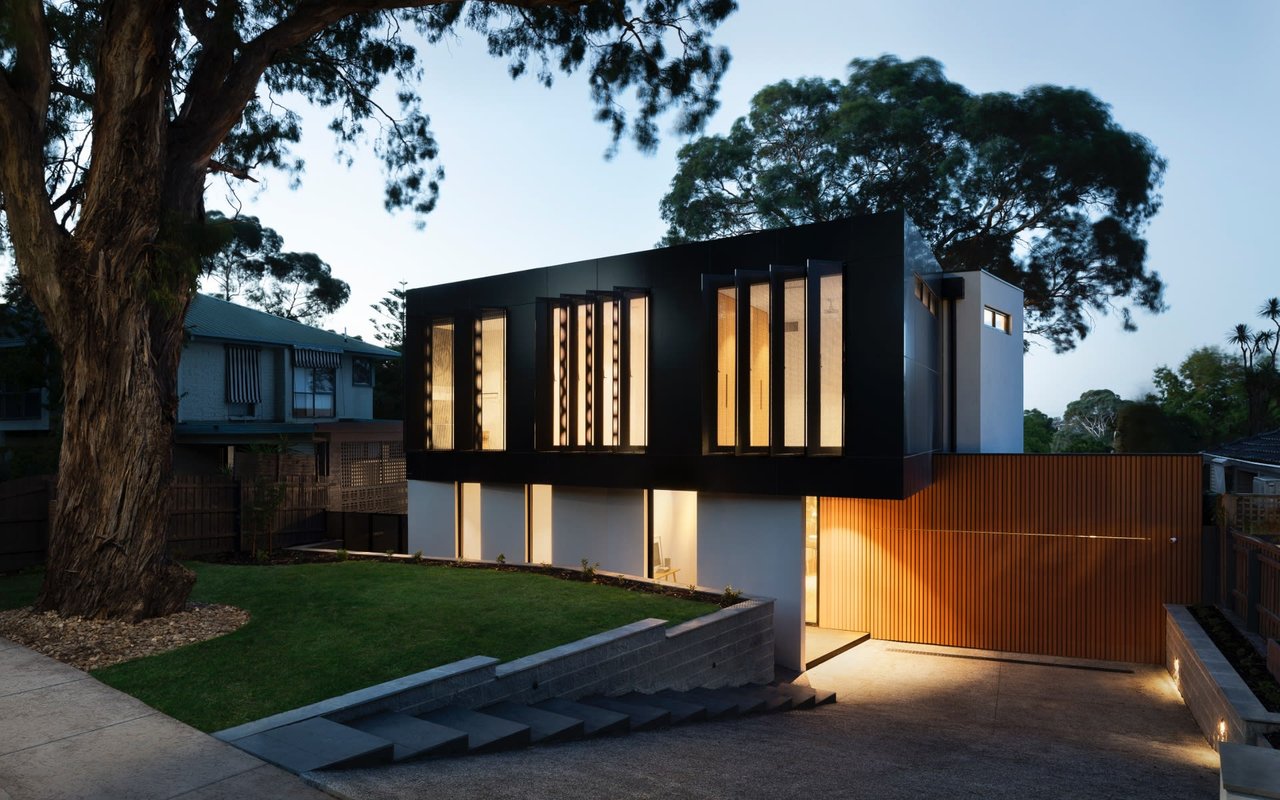
If you own a home worth two million dollars or more in Austin right now, the most important thing you need to understand is that you're not playing the same game as everyone else. The broader Austin market has shifted dramatically in 2026 — inventory has swelled, days on market have stretched to 30-60 days for well-priced homes, and the frenzied pandemic-era bidding wars are firmly in the rearview mirror. But here's the nuance that most generic renovation guides miss: the luxury segment above $2 million is behaving very differently from the rest of the Austin market. We're seeing a bifurcated market where luxury homes at $2M+ and premium neighborhoods are holding value well, while entry-level homes face more competition from new construction. That means your renovation strategy needs to be calibrated specifically for this price tier — and the stakes are higher than they've ever been.
Who's Buying at This Price Point Right Now
Understanding your buyer before you swing a single hammer is renovation strategy 101. The person writing a check for $2 million or more on an Austin property in 2026 is not browsing the MLS hoping to find a deal. They're a tech executive relocating from San Francisco, a finance professional upgrading from a more modest Austin home, or an out-of-state buyer specifically seeking the Austin lifestyle — Lake Travis views, Eanes ISD zoning, the walkability of Tarrytown. At approximately $2M, buyers are entering Austin's luxury market with access to a range of properties, though trade-offs are common — at this level, buyers are typically balancing location versus size versus condition. These are informed, patient buyers with options, and they know exactly what a finished luxury home should look and feel like because they've lived in one. They aren't intimidated by renovation projects, but they will absolutely discount your asking price for the privilege of doing the work themselves.
Why the Rules Are Different Above $2 Million
Think of it this way: renovating a $300,000 Austin home is like painting a landscape on a small canvas — every brushstroke has to work hard. Renovating a $2M home is like working on a mural. The scale changes everything, but so does the audience. The ROI calculus on pre-sale improvements in the luxury segment is different from the broader market. A $25,000 kitchen refresh on a $2 million home isn't about recouping that specific investment — it's about eliminating the buyer objections that would otherwise result in a $75,000 to $100,000 offer discount. Let that sink in for a moment. You're not renovating to add value — you're renovating to prevent value destruction. When a $2M buyer walks through a dated kitchen, they don't see a neutral house at a fair price; they see a negotiating opportunity. Every renovation you skip becomes ammunition in their agent's hands. The buyer who walks through a luxury home with a dated kitchen has already mentally discounted your asking price, and their agent will formalize that discount in the offer.
Renovations That Genuinely Move the Needle
Let's get into the specific upgrades that actually justify their investment at the $2M+ price point in Austin's 2026 market. These aren't guesses or national averages transplanted onto a Texas ZIP code — these are the improvements that luxury buyers in neighborhoods like Westlake, Tarrytown, Barton Creek, and Lake Austin are actively demanding.
The Kitchen: Your Single Highest-Impact Investment
If you're going to put your renovation dollars anywhere in a luxury Austin home, the kitchen is where you start — and where you make sure you get it right. The kitchen is no longer just a place where food gets made; it's the social centerpiece of a $2M home, the first room on every luxury buyer's checklist, and the single space that either validates or destroys your asking price before you've even left the tour. In 2026's Austin market, buyers are particularly responsive to updated kitchens, modern bathrooms, fresh paint in neutral colors, and well-maintained outdoor spaces. A kitchen that feels current and premium signals to a luxury buyer that the rest of the home has been maintained with the same level of care — it sets the emotional tone for the entire showing.
What "Luxury Kitchen" Actually Means to a $2M Buyer
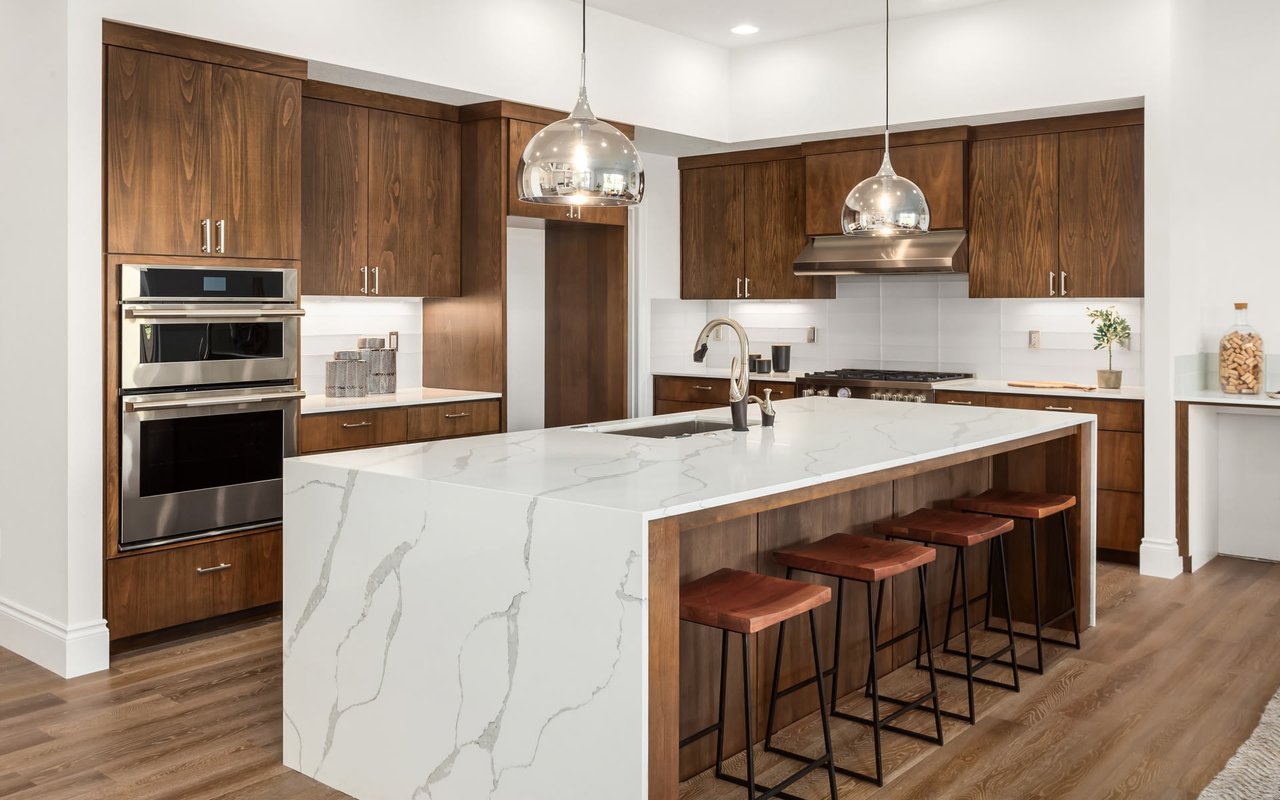
Here's where Austin sellers often get it wrong: they install quartz countertops and call it a luxury kitchen. At the $2M price point, quartz is the baseline, not the finish line. Luxury finishes include quartzite and exotic granite with waterfall-edge islands, custom-built cabinetry with premium woods like walnut, oak, and mahogany, and wide-plank hardwood flooring throughout. We're talking about Sub-Zero or Wolf appliances that integrate seamlessly into the cabinetry, hidden panel refrigerators, professional-grade ranges with statement vent hoods, and kitchen islands large enough to seat four comfortably. Beverage stations and walk-in pantries with custom shelving have moved from "nice-to-have" to buyer expectations in this price bracket. Houzz's 2026 Kitchen Trends study shows renovators are focusing on functionality over looks, with built-in cabinet storage for specific needs, new sinks or countertops, and expanded kitchen areas with new features like beverage stations or walk-in pantries. The investment for a full luxury kitchen refresh at this level can run $60,000 to $120,000, but the protection it provides against offer discounts can easily be two to three times that figure.
Primary Bathroom Transformations That Command Premium Offers
Right behind the kitchen on the luxury buyer's priority list is the primary bathroom — and not just any bathroom update will do. The shift that's happened in the Austin luxury market over the past few years is remarkable: buyers above $2M don't want a functional bathroom, they want a private spa experience that rivals a five-star resort. Buyers are looking for bathrooms that feel like a spa experience, with upgrades such as rain shower heads, double-sink vanities, extra storage, soaking tubs, and anything that contributes to a modern, spa-like experience. Remodeling a bathroom can increase property value by as much as 74% of the renovation cost. In a $2M+ home, you're taking that concept even further — we're talking about freestanding soaking tubs positioned for views, floor-to-ceiling custom tile work, steam showers with body jets, heated floors, and custom millwork vanities with integrated lighting. Think of the primary bathroom as the buyer's final emotional checkpoint. They've toured the kitchen, they've walked the outdoor spaces, and now they're standing in the room where they'll decompose from their day. If that room feels tired, cramped, or generic, you've lost them — even if everything else was perfect.
Outdoor Living Spaces — Austin's Secret Weapon
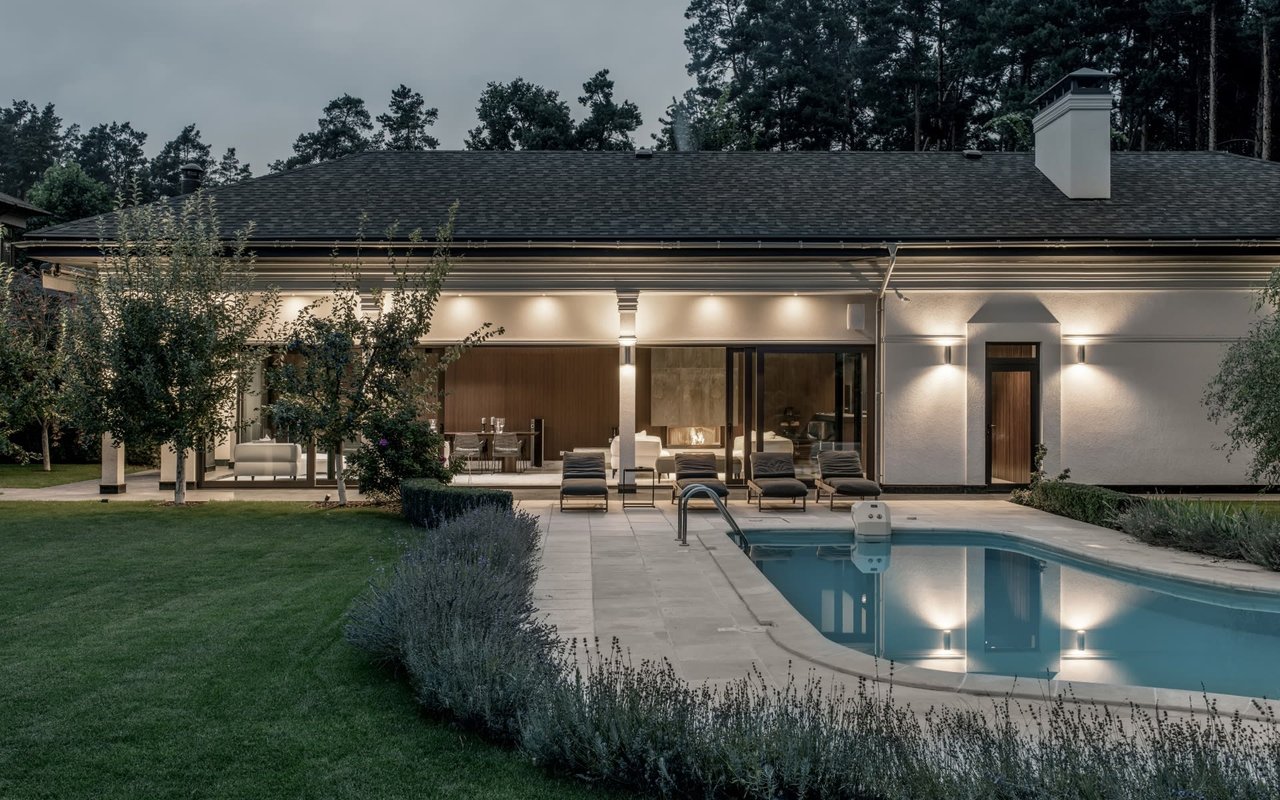
Here's where Austin departs dramatically from national renovation guidance, and where sellers who understand the local market gain a massive edge. Outdoor living in Austin isn't a seasonal luxury the way it might be in Chicago or Boston. It's a year-round lifestyle driver that $2M+ buyers prioritize above almost everything else. Outdoor living spaces are worth significantly more in Austin than the national average suggests. Covered patios, outdoor kitchens, and well-designed deck spaces are not luxury add-ons in Central Texas — they're expected. A $15,000 to $25,000 covered patio addition can easily return 80-100% here because buyers from out of state specifically look for these features. At the $2M price point, however, you need to think beyond a basic covered patio. Luxury outdoor spaces in this bracket feature full outdoor kitchens with professional-grade grills, refrigerators, pizza ovens, and bar seating. They have motorized screens or sliding glass walls that blur the boundary between interior and exterior. They have fire features, landscape lighting systems, and thoughtfully designed hardscaping that creates outdoor "rooms."
Covered Patios, Outdoor Kitchens, and Pool Upgrades
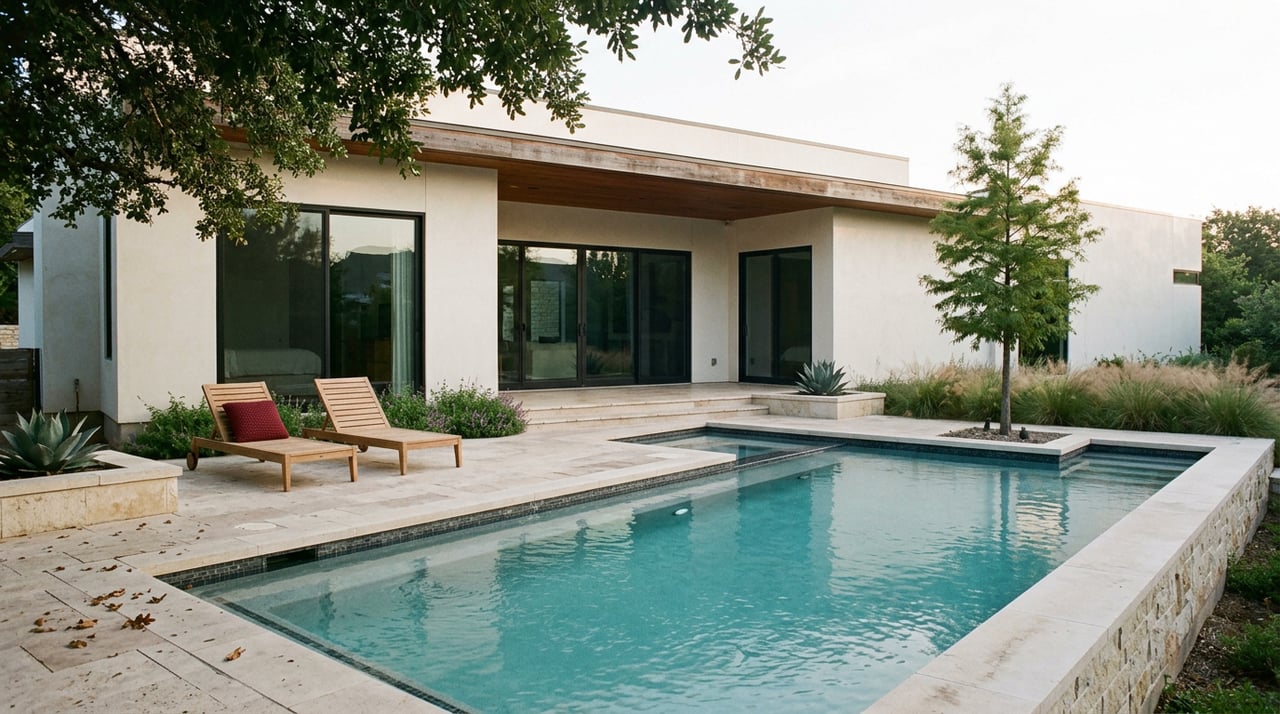
If your $2M Austin home doesn't have a pool, that's a conversation worth having with your agent — because in neighborhoods like Westlake, Lake Austin, and Barton Creek, a pool has transitioned from a luxury to a near-expectation. Homeowners in certain parts of the country can increase their home's value by up to 7% if they add a pool, and building a pool can make financial sense in warmer climate areas. On a $2M home, a 7% increase represents $140,000 in added value — which can justify the $80,000 to $150,000 cost of a well-designed pool-and-spa combination in the right Austin neighborhood. If you already have a pool, invest in modernizing it: smart automation systems that buyers can control from their phones, LED lighting packages, water features, and refinished surfaces make a dramatic visual impact at a relatively modest cost. The outdoor kitchen component is equally powerful — a fully equipped outdoor cooking and entertaining space can be installed for $30,000 to $75,000 and creates the "wow moment" during tours that luxury buyers remember when they're comparing your property against the three others they saw that week.
Smart Home Integration Done Right
Technology has fundamentally changed what luxury means in Austin real estate, and buyers spending $2M or more in 2026 have clear, non-negotiable expectations around smart home features. This isn't about installing a Nest thermostat and calling it a day — that's table stakes for homes a quarter of this price. At the luxury level, buyers want whole-home integration that operates as a single cohesive system. A fully integrated smart home can increase resale value by 5-8%, making it a worthwhile investment. This includes automated lighting and climate control through systems like Lutron or Control4, advanced security systems with perimeter sensors and smart locks, whole-home audio through hidden speaker systems, and motorized window treatments for privacy and energy efficiency. The key word there is "integrated" — systems that talk to each other, can be controlled from a single app or panel, and feel invisible in the home's design rather than bolted on as afterthoughts. Security has moved beyond simple alarms, with luxury properties now featuring perimeter sensors, night vision cameras, and panic rooms — the level of surveillance in today's luxury homes would rival many commercial properties.
Premium Flooring and Custom Millwork
There's a reason the first thing a buyer's eye goes to when they walk into a room is the floor — it literally covers every square foot of the experience. In a $2M Austin home, dated flooring is one of the fastest paths to a lowball offer. Premium flooring options including wide-plank hardwood, herringbone patterns, and heated floors signal luxury craftsmanship to buyers and are among the top finishes that drive premium offers in the Austin market. Beyond flooring, custom millwork — built-in bookshelves, coffered ceilings, wainscoting, custom closet systems — is one of the highest-perceived-value investments you can make in a luxury home. It's the kind of detail that's immediately noticed but also subconsciously catalogued as evidence of quality. Buyers can't always articulate why one home feels more premium than another at the same price point, but custom millwork is frequently the differentiating factor. Budget $40,000 to $80,000 for comprehensive flooring replacement and custom millwork in key rooms, and expect it to punch well above its weight in buyer perception.
The Renovation Decisions That Actually Protect Your Price
Not every high-ROI move involves a full remodel. In the $2M Austin market, some of the smartest investments are the ones that prevent discounting rather than manufacturing new value. Think of these as your defensive renovation plays.
Curb Appeal and Exterior Upgrades
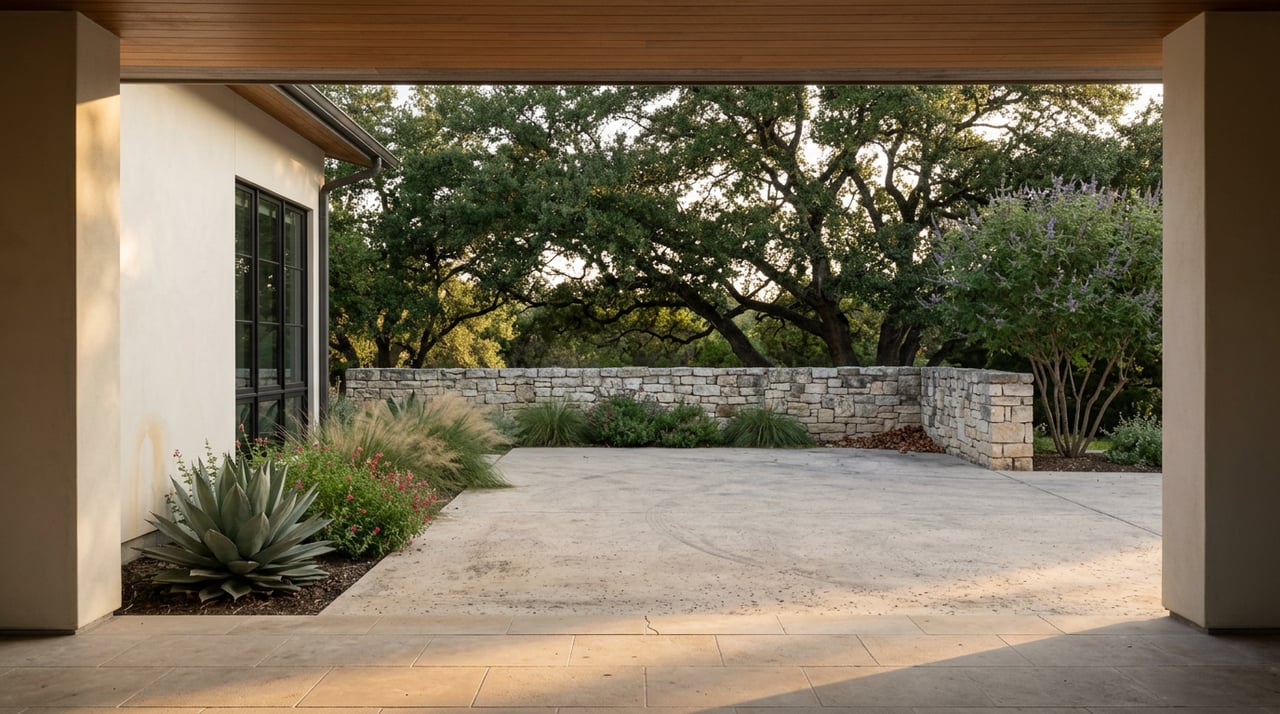
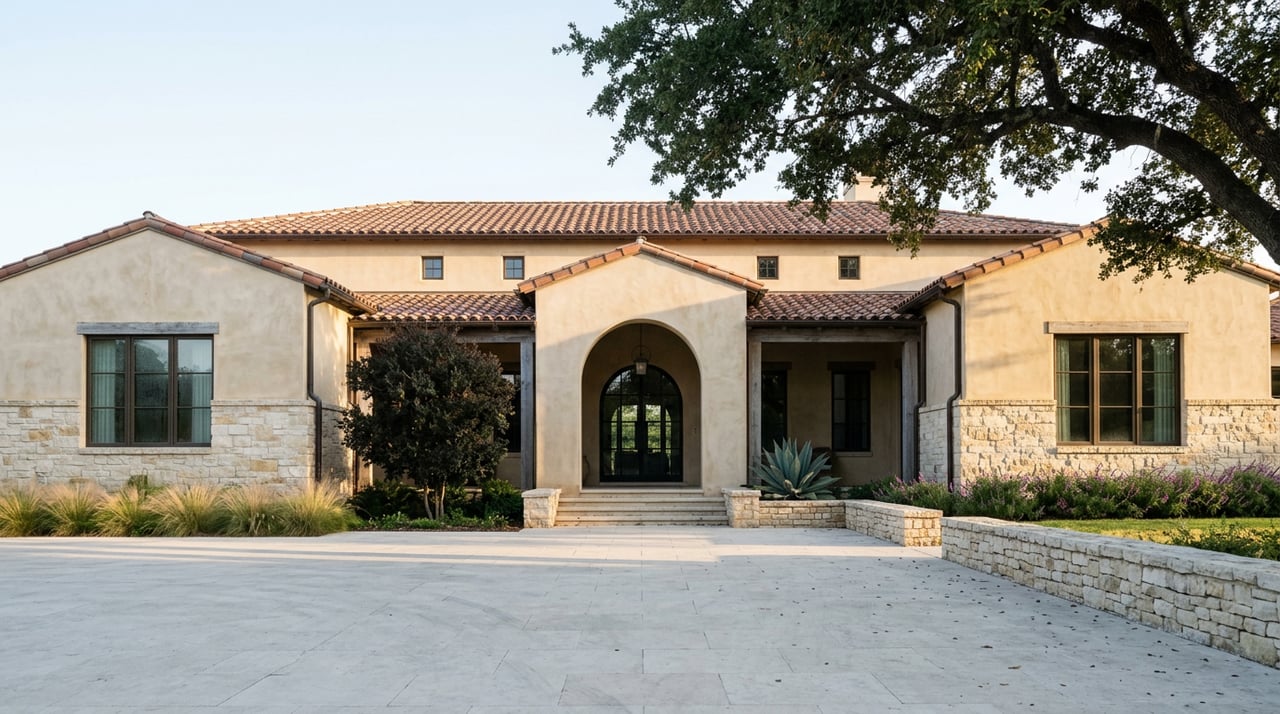
The first impression of a $2M home happens before a buyer steps through the front door, and in a market where buyers have options and time, that first impression can end a showing before it begins. Roof replacement is one of the highest ROI improvements in Texas — a new roof increases home value, improves curb appeal, and helps homes sell faster. At the luxury price point, the roof is just the beginning. Fresh exterior paint or staining, updated entry doors (think solid wood or custom steel), upgraded driveway surfaces, professional landscaping with irrigation systems, and architectural lighting that showcases the home's facade after dark — these are the investments that prevent the mental discount a buyer takes when a luxury home doesn't look the part from the street. Roofing tops the list for most homeowners' exterior renovation projects in 2026, followed by windows and skylights, exterior painting, gutter upgrades, and exterior doors. The exterior sets the buyer's emotional baseline for the entire tour.
Energy Efficiency: The Practical Luxury Buyers Expect
Austin's climate makes energy efficiency a uniquely powerful selling tool that doesn't get nearly enough credit from luxury sellers. The combination of scorching summers, rising utility rates, and an increasingly tech-savvy buyer pool has made energy-efficient systems not just attractive but expected in the $2M+ segment. Energy-efficient features like modern HVAC systems and good insulation resonate with Austin buyers, especially given the city's climate. A complete HVAC overhaul with zoned systems, upgraded insulation, high-performance windows, and solar panels (particularly valuable in Texas given energy grid concerns after the 2021 freeze) can add meaningful value while also reducing the maintenance objections a thorough buyer inspection might surface. These upgrades are also increasingly a selling point in their own right — buyers who've experienced astronomical utility bills in Austin summers will pay a premium for a home that's designed to be efficient.
Renovations That Won't Return Their Cost — Stop Before You Start
Just as important as knowing what to invest in is knowing what to avoid. The Austin luxury market in 2026 has very specific characteristics that make certain renovations money pits regardless of how much they appeal to your personal taste.
The Garage Conversion Trap
This might be the single most consistent piece of advice you'll hear from experienced Austin agents, and it bears repeating here: do not convert your garage. It seems counterintuitive — more square footage should mean more value, right? Wrong. Converting the garage almost always hurts the sale in Austin, where buyers actually use their garages for cars, storage, and escaping the heat. Converted garages on MLS listings almost always result in a price penalty. In the Texas heat, a functional garage is a genuine amenity. It's where the luxury buyer parks their Tesla, stores their patio furniture between seasons, and works on weekend projects without baking alive. The minute you convert that space into a bonus room or in-law suite, you've told every buyer that parking their vehicles will require the driveway — and at $2M, that's not a trade-off they're willing to make.
Over-Personalized Finishes and Niche Upgrades
Here's the trap that catches well-intentioned luxury sellers most often: they renovate their home to be the version of luxury they personally love, and they price those personal choices as if the buyer shares the same taste. Bold kitchen tile backsplashes in jewel tones. Highly specific wine cellars designed for exactly 800 bottles in a precisely configured layout. A home theater with fixed stadium seating that makes the room useless for anything else. A primary bathroom wrapped floor-to-ceiling in rare imported marble that costs $50,000 and appeals to approximately 3% of buyers. What doesn't pay off in Austin's luxury market are over-personalized renovations, luxury upgrades that exceed the neighborhood's expectations, and cosmetic fixes that don't address underlying issues. Every time you make a renovation choice that narrows your buyer pool rather than widening it, you're spending money to reduce demand. The $2M buyer wants luxury — but they want luxury that feels like their vision of luxury, not yours. Neutral elegance that invites imagination will always outsell specific personal expression in the resale market.
Ultra-Luxury Amenities in the Wrong Neighborhood
The principle of the neighborhood comp ceiling applies even at the luxury tier. If the homes within a quarter mile of yours are trading at $1.8M to $2.2M, installing a $200,000 home theater with cinematic-grade equipment, a dedicated speakeasy with a full bar, and a commercial-grade gym isn't going to push your sale price to $2.8M. The neighborhood sets a ceiling that no amount of imported marble can break through — the "margin of safety" principle means that luxury finishes in mismatched price-point environments rarely return their investment. Know your comps. Know your ceiling. Then invest right up to that ceiling — but not through it.
The ROI Reality Check: What the Numbers Actually Say
Let's put some concrete numbers around everything we've discussed, because renovation decisions made without a financial framework are just expensive feelings. The table below reflects the Austin luxury market ($2M+ homes) in 2026 specifically, drawing on local market data rather than national averages that tend to undervalue outdoor improvements in the Texas climate.
| Renovation | Estimated Cost | Estimated Value Protection/Add | Austin-Specific Notes |
|---|---|---|---|
| Full luxury kitchen refresh | $60K–$120K | Prevents $75K–$150K discount | Non-negotiable for $2M+ buyers |
| Primary bathroom spa transformation | $40K–$80K | 70–74% cost recoup + prevents negotiating | Soaking tub + steam shower key |
| Covered patio + outdoor kitchen | $40K–$90K | 80–100% ROI | Unique to Austin's climate; 9-10 months of use |
| Pool installation or modernization | $80K–$150K | 5–7% value increase | Area-dependent; essential in Westlake, Barton Creek |
| Smart home integration (full system) | $30K–$70K | 5–8% value increase | Must be integrated, not piecemeal |
| Premium flooring + custom millwork | $40K–$80K | High buyer perception value | Sets the tone for entire home |
| Exterior refresh + roof + landscaping | $25K–$60K | Prevents 5–10% "cosmetic discount" | First impression is everything |
| Garage conversion | $20K–$50K | Negative ROI — reduces buyer pool | Universally discouraged in Austin market |
| Over-personalized luxury finishes | $50K–$200K | Minimal to negative return | Narrows buyer pool significantly |
According to Austin luxury renovation experts, homes with premium upgrades sell 15-20% faster and at higher price points than standard listings in the Austin Board of Realtors data. The math isn't complicated. A $2M home that sells 20% faster and generates competitive interest among multiple qualified buyers will almost always net more than one that sits on the market for 90 days with a price reduction that tells every prospective buyer something is wrong.
Timing, Permits, and the Austin Selling Window
Here's a practical consideration that too many luxury sellers ignore until it's too late: renovation timing in Austin is as important as renovation selection. A notable 18% spike in expired listings in early 2026 sent a clear signal that the market is rejecting homes that are poorly priced or poorly positioned. Sellers who want to win must launch as the "shiny penny" — in perfect condition and priced sharply — to stand out against leftover inventory. Austin's luxury selling season peaks in the spring — April and May are when the most qualified buyers are active, corporate relocations are finalizing, and the Hill Country is at its most photogenic. If your renovation requires permits, and most kitchen and bathroom work above a certain scope does, you need to be starting that process significantly ahead of your intended listing date.
Austin's City launched an AI pre-check tool in 2026 for standard residential plans, which should help with permit timelines. But the practical advice is clear: if you're planning to list in April or May, and your renovation needs a permit, you should be starting that process well in advance — sellers who miss their ideal listing window because of permit timelines can leave real money on the table in a seasonal market like Austin. Build your renovation timeline backward from your target listing date. Luxury finishes take time to source — custom cabinetry alone has lead times of 8 to 14 weeks through most Austin manufacturers. Factor in contractor availability (Austin's skilled trades are in sustained high demand), material shipping timelines, and the inevitable unexpected discoveries that any renovation in an older home will uncover. A good rule of thumb for a comprehensive luxury refresh on a $2M home is to budget 4 to 6 months of renovation time before your target listing date.
Conclusion
Selling a $2M+ Austin home in 2026 is a fundamentally different exercise than selling one three years ago, and renovating it is a fundamentally different calculation than renovating any home at a lower price point. The market has normalized, buyers are patient and informed, and the gap between a well-prepared luxury listing and a tired one isn't measured in aesthetics — it's measured in six figures. The renovations that move the needle at this price point are the ones that address what luxury buyers in Austin specifically value: a kitchen that performs at their lifestyle level, a primary bathroom that feels like an escape, outdoor living spaces designed for a city where the patio gets as much use as the living room, and smart home systems that feel native rather than bolted on. The renovations that don't move the needle are the ones built on personal taste rather than buyer psychology — garage conversions, niche amenities, and over-personalized finishes that tell buyers they'll be inheriting someone else's vision.
The most important reframe you can make as a luxury seller is this: you're not renovating to express yourself. You're renovating to remove every reason a qualified buyer might use to discount your asking price. Do that well, price it correctly from day one, and Austin's $2M+ market in 2026 will reward you accordingly.
FAQs
1. How much should I budget for pre-sale renovations on a $2M Austin home? The answer depends on your home's current condition relative to the market's expectations, but a reasonable range for a comprehensive pre-sale refresh on a $2M+ Austin property is $80,000 to $200,000. This is not money spent improving your life in the home — it's strategic investment in protecting and maximizing your sale price. Work backward from your asking price and the neighborhood's current comp ceiling to determine where your money will have the most impact.
2. Is adding a pool worth it in Austin before selling? In the right Austin neighborhoods — Westlake Hills, Barton Creek, Lake Austin, and similar luxury enclaves — a pool is increasingly expected rather than optional at the $2M price point. Adding a well-designed pool and spa can increase your home's value by 5 to 7%, and in a $2M home that represents $100,000 to $140,000 in added value, which can justify installation costs in the right situation. Always verify against neighborhood comps and consult a local luxury agent before committing.
3. Should I do a full kitchen remodel or just update appliances and fixtures? At the $2M+ price point, a cosmetic update rarely satisfies a luxury buyer's expectations if the underlying kitchen is fundamentally dated in its layout or design. A full refresh — new countertops, custom cabinetry, luxury appliances, updated flooring, and lighting — is generally the better investment because it eliminates objections entirely rather than just softening them. If the layout and bones are strong, a targeted refresh of $60,000 to $80,000 can deliver results comparable to a full $120,000 remodel.
4. How important is smart home technology to Austin luxury buyers in 2026? It's moved from a bonus to a baseline expectation. Buyers spending $2M in Austin in 2026 — many of whom are tech professionals relocating from Silicon Valley or Seattle — regard whole-home automation as a standard feature, not a premium upgrade. Systems that integrate lighting, climate, security, audio, and window treatments through a single platform add meaningful value and prevent the "it feels outdated" discount that a home without these features receives from tech-savvy buyers.
5. What's the biggest renovation mistake luxury Austin sellers make in 2026? Without question, it's over-personalizing. Sellers invest in renovations that reflect their own aesthetic preferences — bold tile choices, highly specific wine cellars, theater rooms with fixed stadium seating — rather than creating the kind of elevated, neutral luxury that invites buyers to project their own lives onto the space. At $2M, the buyer isn't looking for your dream home. They're looking for their dream home. The closer your renovation choices are to "universally aspirational," the wider your buyer pool becomes, and the stronger the competition for your listing.