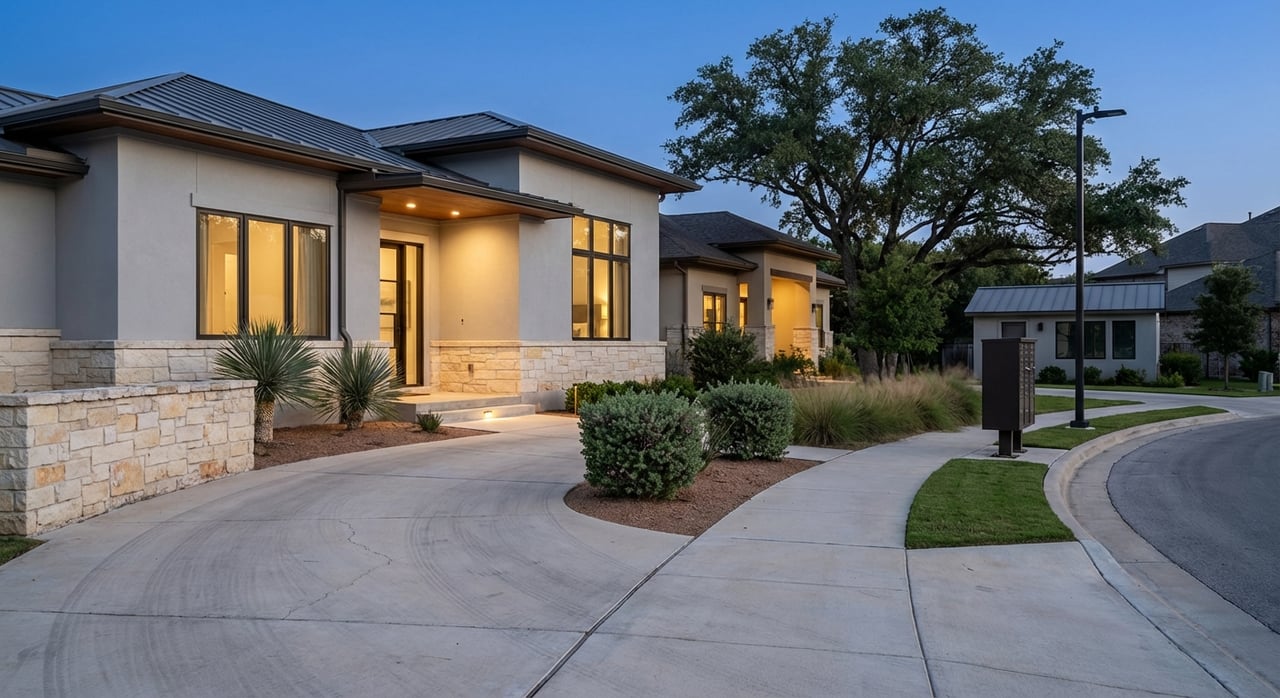
Trying to decide if a master-planned community in Bee Cave is right for you? You are not alone. With resort-style amenities, golf options, and easy access to shops and dining, Bee Cave draws buyers who want convenience with Hill Country scenery. In this guide, you will learn how the major communities compare, what ownership costs to expect, how HOAs and special districts work, and what to verify before you buy. Let’s dive in.
Bee Cave at a glance
Bee Cave sits west of Austin, centered around the Hill Country Galleria and its surrounding retail and dining. The area blends Hill Country terrain with neighborhood amenities and quick access to TX-71 and Loop 620. For a local snapshot of the area’s offerings, the Bee Cave Chamber of Commerce is a helpful overview resource.
Market notes: recent aggregator reports placed Bee Cave’s median sale price around $840,000. You may see different medians from site to site. That is normal because each platform uses different data windows, mixes list and sold prices, and the number of monthly sales can be small enough to skew a single month’s median.
Nearby Lakeway is a separate but related market with more waterfront and longstanding country-club communities. Reported medians there have ranged roughly from the high $600,000s to mid $700,000s depending on timeframe and source.
Where these communities sit
Most Bee Cave master-planned communities sit off TX-71 between Bee Cave Road (Loop 620) and Hamilton Pool Road. You will find golf-centric pockets near 71 and 620, and newer builder communities extending along Hamilton Pool Road. Many residents use Highway 71 to reach Loop 360, MoPac, or downtown Austin. The Hill Country Galleria anchors shopping and dining right in the middle.
Community profiles: who they fit and why
Spanish Oaks
- What it is: A luxury, guarded community built around the private Spanish Oaks Golf Club, a Bobby Weed design. Learn more about the course on the Spanish Oaks Golf Club page.
- Amenities: Private golf, clubhouse, pool pavilion, trails, and concierge-style club services. Club membership is separate from homeownership.
- Schools: Commonly within Lake Travis ISD. Always confirm by address.
- Price level: Estate-scale, multi-million-dollar properties are common.
- Buyer fit: You value privacy, a true private-club environment, and custom-home caliber lots and finishes.
Falconhead and Falconhead West
- What it is: An established golf-course community surrounding Falconhead Golf Club with several sections, including some gated pockets and low-maintenance HOA areas.
- Amenities: Golf access, greenbelts, trails, small parks or pools in certain sections.
- Schools: Typically Lake Travis ISD. Confirm by address.
- Price level: Move-up to luxury, often from the mid six figures into the low seven figures depending on section and finish.
- Buyer fit: You want golf-side living without a private-club initiation, plus proximity to TX-71 and 620.
Sweetwater
- What it is: A large, newer master-planned community with resort-style amenities and multiple phases and builders.
- Amenities: Multiple pools, a fitness center, sports courts, miles of trails, and frequent community events.
- Utilities: Many sections note Municipal Utility District (MUD) service. Always verify the exact taxing units on the property’s tax record.
- Price level: Broad range, from more affordable entry sections into $1 million plus for larger lots and higher-end finishes.
- Buyer fit: You want newer construction, robust amenities, and neighborhood events.
Provence
- What it is: Newer construction along Hamilton Pool Road with national and regional homebuilders.
- Amenities and HOA: Community pool, clubhouse, and trails. Example listings show annual HOA fees for certain homes, but fees vary by phase and lot.
- Utilities: Some listings show MUD service. Confirm by address.
- Price level: Builder materials commonly show mid to upper $500,000s into the $900,000s and up depending on plan and finish.
- Buyer fit: You prefer new builds with an amenity center and proximity to Bee Cave and Dripping Springs corridors.
Other notable neighborhoods
- Bella Colinas: Mid-to-upscale homes and a community amenity center with a pool and splash features. Many homes trade in higher price bands.
- The Homestead: Larger lots with custom or semi-custom homes. Expect estate-style properties.
- Lake Pointe: Established neighborhood with a community pool, courts, and day-dock access to Lake Austin. Mix of price points with some gated pockets and view lots.
- Ladera and The Uplands: Smaller gated, upscale pockets with larger lots and active HOAs.
HOA, MUD, PID: what they mean for you
Understanding these acronyms helps you estimate your true cost of ownership.
- MUD: A Municipal Utility District often finances water and sewer infrastructure with bonds. MUD taxes appear on your property tax bill until bonds are repaid.
- PID: A Public Improvement District levies assessments on properties within its boundary to fund infrastructure like roads or streetscapes. PID assessments are time-limited but material.
- PUD: A planned unit development is a land-use designation, not a taxing district.
For plain-English definitions and why these charges appear on your tax bill, see this primer on MUD, PID, and PUD differences.
HOA basics in Texas
Texas law governs how property owners’ associations operate and disclose. The Texas Real Estate Commission explains how to find an association’s management certificate and related filings, which helps you confirm who manages the HOA and how to request records. Start with TREC’s guidance on HOA management certificates.
Practical tip: Request the HOA’s management certificate, CC&Rs, bylaws, current budget, financials, and any reserve study early in your process so you can spot rules, fees, and upcoming projects before you commit.
Reserves and special assessments
Healthy reserves help associations avoid surprise special assessments for big projects like roofs, roads, or amenity repairs. Industry guidance recommends using qualified professionals to prepare reserve studies and fund them on a plan. Learn more about reserve studies from Community Associations Institute.
When you review a community, ask for the latest reserve study, funding plan, and a record of special assessments in the last few years.
MUDs and PIDs in Bee Cave
Bee Cave has seen PIDs considered or created for large projects over time. For example, city agendas have included items related to The Backyard and the Village at Spanish Oaks. You can read local coverage for context in this Community Impact report.
How to check any property: use the Travis Central Appraisal District’s parcel search to see the “Taxing Jurisdictions” list, which will show any MUD or PID attached to that parcel. Start your research on the Travis Central Appraisal District site.
Club dues are separate from HOA dues
In golf or gated communities, the HOA fee typically covers common-area maintenance, gates, and neighborhood amenities. Private-club initiation and monthly dues are separate line items for golf, dining, or clubhouse access. Spanish Oaks is a prime example of a community where club membership and HOA are distinct. Always ask whether club membership is optional, what the initiation and monthly dues are, and how transfers work.
What it might cost each month
Use this simple, hypothetical example to understand how costs stack up. Replace these inputs with actual numbers for the specific property you are considering.
- Purchase price: $900,000
- Combined property tax rate: 2.0% city/county/school + 1.0% MUD = 3.0% total (example only)
- HOA dues: $1,200 per year
- Club dues: $3,600 per year
- Insurance and routine maintenance: 1% of purchase price per year (rule of thumb), or $9,000
Illustrative math: Taxes $27,000 + HOA $1,200 + club $3,600 + insurance/maintenance $9,000 = about $40,800 per year, or roughly $3,400 per month. This is only a framework. Always pull the actual taxing units and current rates for the address from the Travis Central Appraisal District and verify club and HOA fees with the HOA and club.
Bee Cave vs. nearby Lakeway
- Lifestyle focus: Bee Cave leans toward golf, new-build communities, and Hill Country Galleria convenience. Lakeway offers more lake-oriented amenities and marinas.
- New-build supply: Bee Cave and Hamilton Pool Road host multiple active builder communities. Lakeway has pockets of new construction but more established neighborhoods near the lake.
- Pricing tone: Bee Cave often carries a higher median, while Lakeway has trended lower in some recent snapshots. Medians vary by data source and timeframe.
- City snapshot: For a neutral summary of Lakeway’s setting and services, visit the city’s overview page on Lakeway’s official site.
Buyer checklist: verify before you offer
Use this list to compare communities and protect your budget.
- Confirm school assignment. Check attendance boundaries directly with Lake Travis ISD and verify by address using the district’s attendance zone resources. Boundaries can change.
- Pull the property’s tax record. On the Travis Central Appraisal District site, review the “Taxing Jurisdictions” for any MUD or PID and note the combined rate. Ask the seller or title for the most recent tax bill. Start with TCAD.
- Request the HOA packet. Ask for CC&Rs, bylaws, current budget and financials, any reserve study, board minutes for the last 12 months, management contract, insurance declarations, the assessment schedule, and any pending special assessments. Cross-check the HOA’s management certificate via TREC’s guidance.
- Get MUD/PID bond details if applicable. Ask title or the district for the bond and assessment schedules, recent rates, and any planned bond elections. Confirm whether rates may decline as bonds are repaid.
- Clarify club costs. If a private club is involved, ask whether membership is optional, initiation fees, monthly or annual dues, capital contributions, and whether memberships transfer on resale.
- Review special-assessment history. Ask whether the association has levied special assessments in recent years, and why. Compare that with the reserve study. For best practices, see CAI’s reserve funding guidance.
- Title and liens check. Ask title to confirm all taxing units, check for recorded PID liens, and verify deed and plat details.
Ready to compare homes or get a precise cost breakdown for a property you love? Reach out to Meryl Hawk for a focused game plan and on-the-ground guidance.
FAQs
What makes a Bee Cave master-planned community different from a standard neighborhood?
- MPCs in Bee Cave typically bundle amenities like pools, trails, and sometimes golf access, with active HOAs that manage common areas and community standards. Fees and amenities vary by community.
How do I know if a Bee Cave home is in a MUD or PID?
- Look up the parcel on the Travis Central Appraisal District site and review the “Taxing Jurisdictions.” Any MUD or PID will be listed with the other taxing units.
Are club memberships in Spanish Oaks or other golf communities required to live there?
- It depends on the community. In many cases, private-club memberships are separate from HOA dues and may be optional. Always request current membership details and costs in writing.
Which schools serve Bee Cave communities, and can they change?
- Most Bee Cave neighborhoods are served by Lake Travis ISD. Attendance zones can change as the district grows, so verify the assigned campus by address using the district’s attendance zone resources.
Why do different websites show different Bee Cave median prices?
- Medians shift by time window, whether the data is list or sold price, and how many homes sold in that period. Smaller monthly sales counts can skew short-term medians.