Thinking About Buying in Barton Creek, Austin? Here's Everything You Need to Know About the Market in 2026
If you've been circling the Austin luxury market for a while, chances are Barton Creek has come up more than once in your research. And it should. This is one of the most distinctive, complex, and misunderstood real estate submarkets in all of Central Texas. People hear "golf community" and immediately form a mental image that's about twenty percent accurate. Barton Creek is far more layered than that — it's a collection of sixteen-plus distinct neighborhoods wrapped around a resort campus, nestled into the Texas Hill Country, and anchored by one of the best school districts in the entire country. Whether you're relocating from California with two kids, or you're a local Austinite finally ready to make the move west, this guide is going to walk you through everything you need to know about the Barton Creek market in 2026 — the real numbers, the nuances, and the decisions that most buyers don't figure out until they're already in escrow.
What Makes Barton Creek Different from Every Other Austin Neighborhood
Let's start with the obvious question: why does Barton Creek command the kind of prices it does? After all, there are plenty of luxury neighborhoods in Austin. Westlake is closer to downtown. Tarrytown has that old-money charm. Lake Travis has the water. So what exactly does Barton Creek offer that keeps serious buyers coming back? The answer is a combination of factors that almost nowhere else in Austin can replicate simultaneously — and once you understand that combination, the pricing starts to make a lot more sense.
The Hill Country Lifestyle You Won't Find Closer to Downtown
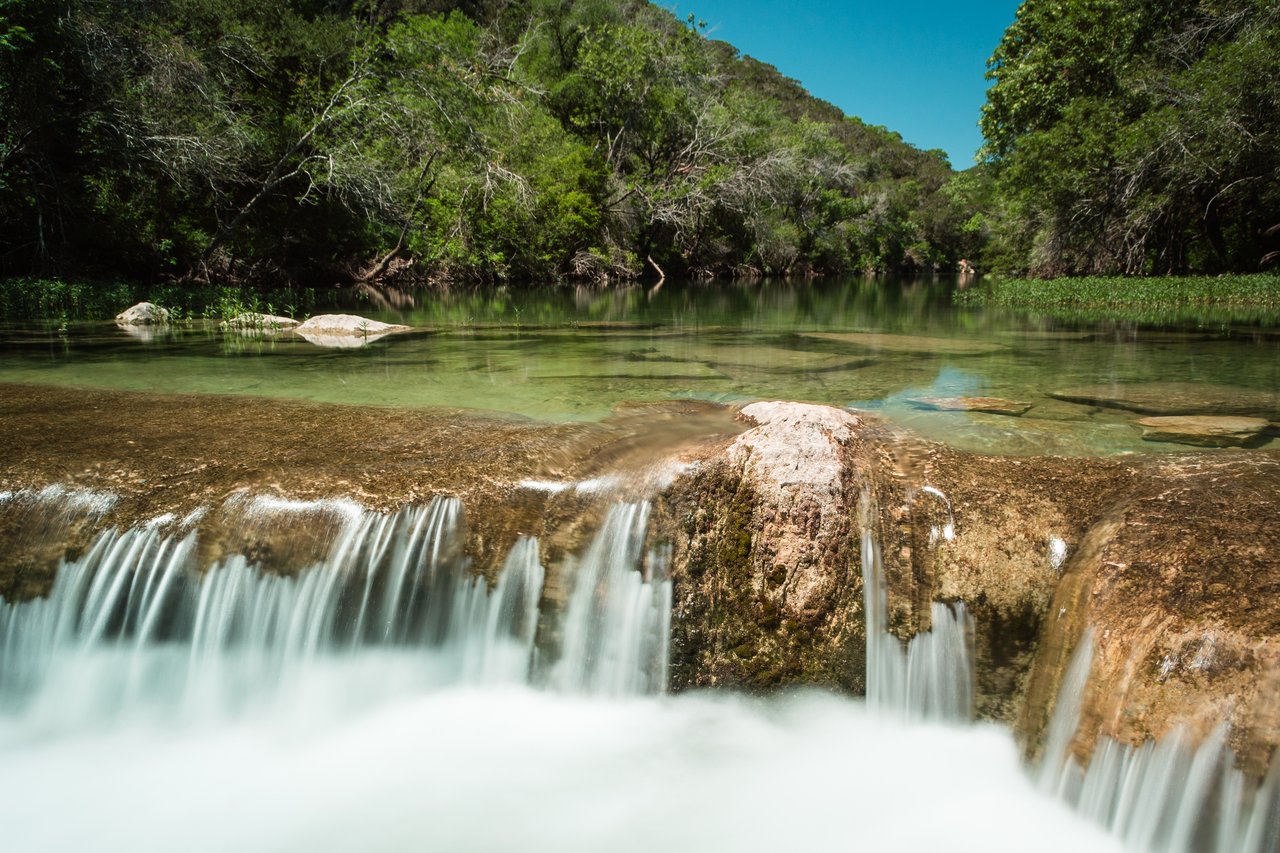
The Barton Creek Greenbelt offers over 12 miles of trails for hiking, biking, and access to natural swimming areas and limestone cliffs — and for buyers who want a home that feels more like a retreat, Barton Creek's combination of terrain, greenery, and club lifestyle is genuinely hard to replicate. Think about what that actually means in daily life. You wake up to Hill Country views, drive two minutes to the trailhead, and you're still twenty minutes from downtown Austin. You're not choosing between nature and city — you're getting both, which is an extremely rare value proposition in a metro that's grown as fast as Austin has. The terrain itself also creates a natural barrier to overdevelopment, which we'll come back to when we talk about what's actually supporting prices long-term.
Located in the rolling hills of West Austin, the Barton Creek community offers all the perks of country living only 20 minutes from downtown. It's comprised of sixteen neighborhoods each with its own gate and unique vibe, sought after for its picturesque views, spacious homes, and proximity to excellent schools including four private schools and both Austin ISD and Eanes ISD homes. That sixteen-neighborhood structure is actually one of the most important things to internalize before you start touring. Barton Creek isn't a single neighborhood — it's a zip code that contains an entire ecosystem of micro-markets, each with its own pricing dynamics, HOA rules, lot character, and buyer profile. Treating it as one monolithic place is the fastest way to either overpay or stumble into the wrong pocket.
Gated Privacy at Scale
The families buying in Barton Creek in 2026 are choosing it for three things that have nothing to do with a tee time: Eanes ISD, lot sizes you can't find closer to downtown, and a level of day-to-day privacy that Tarrytown and Westlake Hills proper don't offer at the same price point. Privacy in Barton Creek isn't just a marketing word — it's structural. The gated entry points, the topography, the larger lot sizes, and the sheer scale of the Barton Creek Preserve all work together to create a feeling of separation from urban life that genuinely can't be faked. Barton Creek is the only community in Austin where you get four championship golf courses, a gated security environment, and top-rated public schools in one package. When you start stacking those elements on top of each other, the price premium stops feeling arbitrary and starts feeling like simple supply and demand logic.
Understanding the Barton Creek Real Estate Market in 2026
Okay, let's get into the numbers. This is where a lot of buyers either get confused or get misled, because the data on Barton Creek in 2026 tells a story that sounds contradictory on the surface. Average prices are up. Median prices in the broader zip code are down significantly. Negotiation discounts are at historic highs. And yet, long-term appreciation signals are pointing upward. How does all of that coexist? The short answer is that Barton Creek's market is highly segmented, and the headline numbers only make sense when you understand which layer of the market they're describing.
Where Home Prices Actually Stand Right Now
Barton Creek home values are showing modest appreciation in the $2.18M–$2.22M average range with a 3.1% year-over-year increase, even as price-per-square-foot data reflects broader market recalibration. Buyers currently hold meaningful negotiation leverage, with homes selling at approximately 9–10% below list price, which can translate to $180,000–$220,000 in savings on a typical transaction. Let that sink in for a second. On a $2.5M home, you're potentially negotiating $225,000 to $250,000 off the asking price before you even start talking about closing costs or inspection repairs. That kind of leverage in a luxury market is genuinely unusual, and it's the direct result of the elevated interest rate environment narrowing the buyer pool at this price tier.
The price floor in Barton Creek sits around $1.5M in 2026, and that buys an older home on a standard lot that likely needs updating. Renovated homes in strong sections trade between $2M and $3.5M. New construction with premium views or oversized lots crosses $4M and can push past $5M. At the same time, the broader zip code story is more complicated. The largest year-over-year median price decline among Austin's tracked ZIP codes is in 78735 — the Barton Creek and southwest Austin ZIP code — where the median fell from $1,523,290 to $1,246,905, a drop of 18.1 percent and $276,385 in absolute terms. This figure sounds alarming until you understand that the 78735 zip code encompasses a wide range of product types and price points, and the steepest declines are happening in the upper-mid-luxury segment that sits between true entry-level and the ultra-luxury tier — not in the established premium enclaves where most serious Barton Creek buyers are shopping.
The Buyer Leverage Window — And Why It Won't Last
This is the part of the 2026 Barton Creek market story that deserves the most attention, because it has real dollar implications and a limited shelf life. Based on current absorption rates and the 3.1% annual appreciation trend, Barton Creek's $2M–$3.5M tier is on a trajectory to retest 2022 peak values within the next 18–24 months. This is faster than the broader Austin market recovery timeline. Buyers who purchase during the current leverage window are effectively locking in below-peak pricing with appreciation momentum already visible in the data.
The logic here is straightforward once you understand the market mechanics. In a higher-rate environment, the buyer pool narrows and negotiation discounts deepen. That is the environment Barton Creek is in right now. However, when rates decline, competition returns quickly and the 9–10% negotiation discount will compress. The window of buyer leverage is real but not permanent. As one Austin real estate expert put it: "The buyers I see make the most costly mistake in this market are the ones waiting for the 'perfect' rate environment before pulling the trigger. What they don't account for is that every month they wait, the negotiation leverage they have today is eroding. Right now, a well-positioned buyer can walk away from a Barton Creek closing having saved $200,000 or more below list price."
Price Per Square Foot: What the Data Is Really Telling You
Here's a nuance that trips up a lot of buyers who come in armed with raw data but not the context to interpret it. Overall home values in Barton Creek are up 3.1% year-over-year, yet price per square foot is down compared to the 2022 peak. The explanation lies in what is selling. Larger homes and estate-sized properties are transacting at higher absolute prices, but because those homes carry more square footage, the per-foot metric compresses even as total price rises. Price per square foot currently ranges from $513 to $553, with some premium properties in Barton Creek West commanding $600–$750 per square foot or higher. When you compare that to neighboring Westlake Hills, where price per square foot exceeds $756, the relative value proposition of Barton Creek starts to look quite compelling for buyers who want a lot of square footage and lot size for their dollar.
The Sub-Communities of Barton Creek (And Why They Matter More Than the Zip Code)
If there's one single piece of advice that separates savvy Barton Creek buyers from everyone else, it's this: stop thinking about Barton Creek as a neighborhood and start thinking about it as a collection of six to sixteen distinct communities that happen to share an address. The difference between making a great purchase and a mediocre one in this market is almost entirely determined by which sub-community you target — and why.
Barton Creek West vs. The Estates: A Tale of Two Price Tiers
Barton Creek's sub-community structure creates a $5M+ price range within the same zip code — from The Estates at $1.5M–$2.5M to Barton Creek West at $3M–$7M — and understanding why requires knowing the specific drivers at each level. Barton Creek West represents the premium tier of the community. You're looking at newer construction, more contemporary architectural styles, flatter (and thus more usable) terrain, and price points that reflect all of that. The Estates, by contrast, offers an entry point into the Barton Creek lifestyle with more traditional architecture and older builds that often carry renovation upside. Neither is objectively better — they serve entirely different buyer profiles, and confusing one for the other is an expensive mistake.
One local expert articulated this distinction clearly: "Buyers who come to Barton Creek looking at zip-code-level median prices are working with the wrong map. A $2.1M property in The Estates and a $2.1M property in Barton Creek West are entirely different buying decisions — different lot sizes, different HOA structures, different school zoning in some cases, and very different renovation ceilings because of environmental restrictions." That last point — renovation ceilings due to environmental restrictions — is something most buyers don't factor in at all until it's too late.
The Preserve, Amarra, and Other Enclaves Worth Knowing
Price points and architectural styles can vary significantly between enclaves like The Preserve, with custom estates ranging from $3.5M to over $10M, and Barton Creek Estates, where homes typically fall between $1.5M and $3M. Understanding these micro-markets — including Amarra, Escala, and Versailles — is crucial for any prospective buyer. Amarra Drive in particular has become a favorite among buyers seeking contemporary custom homes on premium lots, with a design aesthetic that skews more modern than some of the older sections of the community. Barton Creek Lakeside offers lots near the Barton Creek Greenbelt, while Barton Creek West skews newer with more modern construction and flatter terrain. Each of these sub-communities has its own HOA, its own set of deed restrictions, and its own character — which means your due diligence process for a Barton Creek purchase is considerably more involved than buying in a standard single-HOA neighborhood.
Schools in Barton Creek — The Factor That Moves Price More Than Anything Else
If you ask any experienced Barton Creek real estate agent what single factor drives the most price differentiation within the community, they'll almost all give you the same answer: school district zoning. This isn't a soft lifestyle consideration — it's a hard financial variable that can shift your purchase price by hundreds of thousands of dollars depending on which side of the boundary line you're on.
Eanes ISD vs. Austin ISD: How School Zoning Affects Your Budget
Barton Creek falls within Eanes ISD in its western sections — a district that Niche ranks #1 in Texas and #7 nationally as of 2026. That ranking is the single biggest driver of demand in this part of West Austin. Families relocating from California, New York, and Seattle consistently cite Eanes ISD as their primary reason for targeting Barton Creek, Westlake Hills, or Rollingwood over neighborhoods further east or north. Here's where the complexity comes in, though. Not every home in Barton Creek is zoned to Eanes ISD. Barton Creek proper is largely zoned to Austin ISD, while some western sections of the 78735 ZIP near Lost Creek fall in Eanes ISD. That boundary distinction is not always reflected accurately in listing descriptions or third-party data tools, which means buyers absolutely must verify school zoning by exact street address before making an offer.
The price-per-square-foot premium for confirmed Eanes ISD zoning is meaningful in this market — enough to justify a dedicated verification step before making an offer. Buyers should contact the district directly to confirm boundary classification rather than relying on listing descriptions or third-party data tools, and get confirmation in writing from the district prior to closing, particularly for any address near known boundary transition zones. For families relocating to Austin, this step can be the defining factor in a $500,000+ price range decision. Don't skip it.
The True Cost of Owning in Barton Creek
Here's a conversation that surprises even experienced luxury buyers when they first encounter Barton Creek: the sticker price of the home is not the full picture of what you'll spend to own it. The annual cost stack in this community is more complex than almost anywhere else in Austin, and buyers who don't model it out in advance sometimes find themselves in a financial position they didn't expect.
HOA Fees, Property Taxes, and the Surprises Buyers Don't See Coming
Eanes ISD zoning, environmental supply restrictions, and the full annual cost stack — including property tax, HOA, and potential MUD fees — are the three most underexplained price drivers that directly affect buyers in Barton Creek. Texas property taxes are famously high relative to most other states — typically running in the 1.8–2.3% range on assessed value in this area. On a $2.5M home, that's $45,000 to $57,500 per year in property taxes alone before you've considered HOA dues, which vary by sub-community but can run from a few hundred dollars to several thousand dollars per month in the more amenity-rich sections. Some sections of Barton Creek also carry Municipal Utility District (MUD) fees, which add another layer to the annual cost equation. HOA fees and deed restrictions vary by section; buyers should review the specific rules for any section before making an offer — and specifically ask about what those dues cover and what they don't.
Most Barton Creek homes come with access to the Barton Creek Country Club, which offers some of the best dining, golfing, swimming, tennis, fitness, and spa facilities in the city. That membership is genuinely one of the most compelling aspects of the Barton Creek lifestyle — but it's not free, and if you're someone who won't use it regularly, you need to factor that into your total cost math honestly. The buyers who feel most satisfied with their Barton Creek purchase are almost always the ones who did the full cost-of-ownership calculation before they fell in love with a specific house.
How Barton Creek Compares to Other Austin Luxury Neighborhoods
It would be a disservice to talk about Barton Creek in a vacuum without acknowledging that serious buyers in this market are almost always cross-shopping. The most common comparisons involve Westlake Hills, Tarrytown, and sometimes Rob Roy or Spanish Oaks. Each comparison reveals something important about what Barton Creek is optimized for — and for whom.
Barton Creek vs. Westlake Hills vs. Tarrytown
Barton Creek generally offers a lower price per square foot ($553–$668) compared to West Lake Hills ($756+), while delivering a resort-style lifestyle centered on the Omni Barton Creek Resort, Hill Country terrain, and gated seclusion. Compared to urban luxury alternatives like Tarrytown and Pemberton Heights, Barton Creek trades walkability and proximity for privacy, acreage, and a natural setting. One West Austin real estate expert summed up the tradeoff this way: "Barton Creek attracts buyers who want to feel like they are on vacation every day without leaving Austin. The resort access, the Hill Country views, and the gated privacy create an experience that walkable urban neighborhoods simply cannot replicate. But buyers need to understand that this lifestyle comes with trade-offs in commute time and a more complex cost structure than most neighborhoods in this price range."
For buyers narrowing the field, the better question is not "Which neighborhood is best?" but "Which neighborhood best matches how I want to live?" In practical terms: choose Westlake for proximity, prestige, and school-driven demand. Choose Tarrytown for classic Central Austin character and close-in convenience. Choose Barton Creek for golf, privacy, and a Hill Country feel. That framework is genuinely useful because it acknowledges that Barton Creek is the right answer for a specific type of buyer — not every buyer. If you're prioritizing walkability and being able to stroll to restaurants, Barton Creek is going to feel isolating. If you're prioritizing space, privacy, natural beauty, and a self-contained lifestyle ecosystem, it's going to feel like exactly what you were looking for.
What Buyers Can Expect in the Negotiation Process
One of the most practically useful things to know about buying in Barton Creek in 2026 is that the negotiation dynamics are more favorable to buyers than they've been in years. On average, homes in Barton Creek are selling after around 115 days on the market — significantly longer than the 43-day average seen the prior year. That extended days-on-market figure is your leverage. Sellers who have been watching their homes sit for three to four months are in a very different psychological position than sellers in a hot market where offers come in over list price within a weekend. A well-prepared buyer with clear financing and a skilled agent can use that dynamic to negotiate not just on price, but on closing costs, repairs, and timeline.
Austin's market has shifted toward more balanced conditions compared to the most competitive years, giving buyers more room to evaluate options even as strong homes in prime locations continue to attract demand. The caveat worth keeping in mind is that this balance isn't uniform across all sub-communities. In the most desirable sections of Barton Creek West, well-priced listings on premium lots with Hill Country views are still moving faster than the market average. The 115-day figure is an average across the entire community, and averages can obscure enormous variation. Your negotiation position depends heavily on which specific section you're buying in and how the comparable sales data looks in that pocket.
The families who get the strongest deals in Barton Creek often flip the assumption that the newest home is the best value. Older homes on oversized lots, bought below replacement cost, give buyers room to renovate exactly what they want without paying the new-construction premium. This strategy — targeting older homes with renovation potential on premium lots — is particularly smart in Barton Creek right now, when construction costs have moderated somewhat from their post-pandemic highs and when the negotiation environment is working in buyers' favor. If you can identify a home with strong bones, a great lot, and a seller who's been waiting for four months, you're in a genuinely strong position.
Should You Buy in Barton Creek in 2026?
After walking through the data, the lifestyle factors, and the negotiation landscape, where does all of this leave a prospective buyer? The honest answer is: it depends entirely on your specific circumstances, timeline, and what you're optimizing for. But the market conditions in 2026 are creating a window that genuinely favors prepared buyers who know which sub-community they want and have their financing in order.
Unlike other Austin luxury neighborhoods, environmental regulations on the Edwards Aquifer Recharge Zone and the Save Our Springs Ordinance physically limit new development, creating a supply scarcity that protects existing property values regardless of broader market conditions. That long-term price floor is one of the most compelling structural arguments for buying in Barton Creek at any point in the market cycle — but especially now, when you can combine that fundamental strength with near-peak negotiation leverage. The combination of constrained supply, top-tier schools, resort amenities, and proximity to downtown creates a demand profile that simply doesn't disappear when interest rates are elevated. It compresses. And when that compression releases, prices move — fast.
The ultra-luxury tier above $1.5 million is the only price segment in Austin currently posting positive average gains, with the average appreciation across that tier running at approximately plus 3.5 percent. Barton Creek sits firmly in that outperforming tier when you're looking at the established premium sections. The buyers who will look back on 2026 as a great year to have entered this market are the ones who did their homework on sub-community selection, verified school zoning, modeled out their total annual cost stack, and pulled the trigger while the negotiation window was still open.
Conclusion
Barton Creek in 2026 is a market that rewards buyers who do the work. The headline numbers can be confusing — median prices in the broader zip code are down sharply, but the premium sub-communities are showing appreciation. Negotiation leverage is at historic highs, but that window will close when rates move. School district zoning can shift your purchase price by hundreds of thousands of dollars, but only if you know to verify it. The total cost of ownership is more complex here than almost anywhere else in Austin, but it's entirely modelable if you ask the right questions early.
What doesn't change is the fundamental appeal of what Barton Creek offers: Hill Country terrain twenty minutes from downtown, four championship golf courses, gated privacy, Eanes ISD access in the right sections, and a supply constraint that's built into the landscape itself by environmental regulation. That's not a manufactured lifestyle — it's a genuinely rare combination of factors that explains why serious buyers keep landing here. If you've been thinking about making the move, 2026 might be the most strategically advantageous time to do it.
FAQs
1. What is the average home price in Barton Creek, Austin in 2026? Barton Creek home values are currently averaging in the $2.18M–$2.22M range, reflecting a 3.1% year-over-year increase. Entry-level homes in older sections start around $1.5M, while premium new construction in Barton Creek West can exceed $5M–$7M depending on lot, views, and finishes. The specific sub-community you target will have a bigger impact on your price than any market-wide average.
2. Is Barton Creek in Eanes ISD or Austin ISD? This is one of the most important questions a buyer can ask — and the answer is: it depends on which section. Most of Barton Creek proper falls within Austin ISD, while some western sections near Lost Creek are zoned to Eanes ISD, which Niche ranks #1 in Texas as of 2026. Always verify school zoning by exact street address directly with the district before making an offer, and get confirmation in writing.
3. How long are homes sitting on the market in Barton Creek right now? As of early 2026, homes in Barton Creek are averaging around 115 days on the market — significantly longer than the 43-day average seen the prior year. This extended time-on-market creates real negotiation leverage for buyers, particularly on homes that have been sitting for three months or more.
4. What is the difference between Barton Creek West and the main Barton Creek community on Barton Creek Blvd? These two areas serve distinct buyer profiles despite sharing the Barton Creek name. The main Barton Creek community along Barton Creek Blvd features larger homes on more expansive lots, with the added advantages of closer proximity to downtown Austin, the airport, and Westlake — making it the more convenient choice for buyers who want the Barton Creek lifestyle without sacrificing commute time. Barton Creek West, by contrast, sits further out and tends toward less expensive homes than the core Barton Creek area. Buyers comparing the two should weigh lot size, home scale, and location convenience carefully — the right choice depends heavily on whether your priority is square footage and accessibility or newer architecture and a more secluded feel.
5. What are the ongoing costs of owning a home in Barton Creek beyond the purchase price? Beyond the mortgage, Barton Creek buyers should budget for Texas property taxes (typically 1.8–2.3% of assessed value annually), HOA fees that vary significantly by sub-community, potential Municipal Utility District (MUD) fees in some sections, and Barton Creek Country Club membership fees if applicable. On a $2.5M home, annual carrying costs beyond the mortgage can easily reach $70,000–$90,000 or more, which is why total cost modeling is a non-negotiable part of the buying process here.