Why Austin's Luxury Real Estate Market Is Unlike Any Other
Let's be real for a second — Austin isn't just a city anymore. It's a phenomenon. Over the past decade, this Texas capital has transformed from a quirky college town known for its live music and breakfast tacos into one of the most sought-after luxury real estate markets in the entire United States. And if you're trying to decide where to plant your high-end flag in this city, you've got a genuinely thrilling — and genuinely difficult — choice to make.
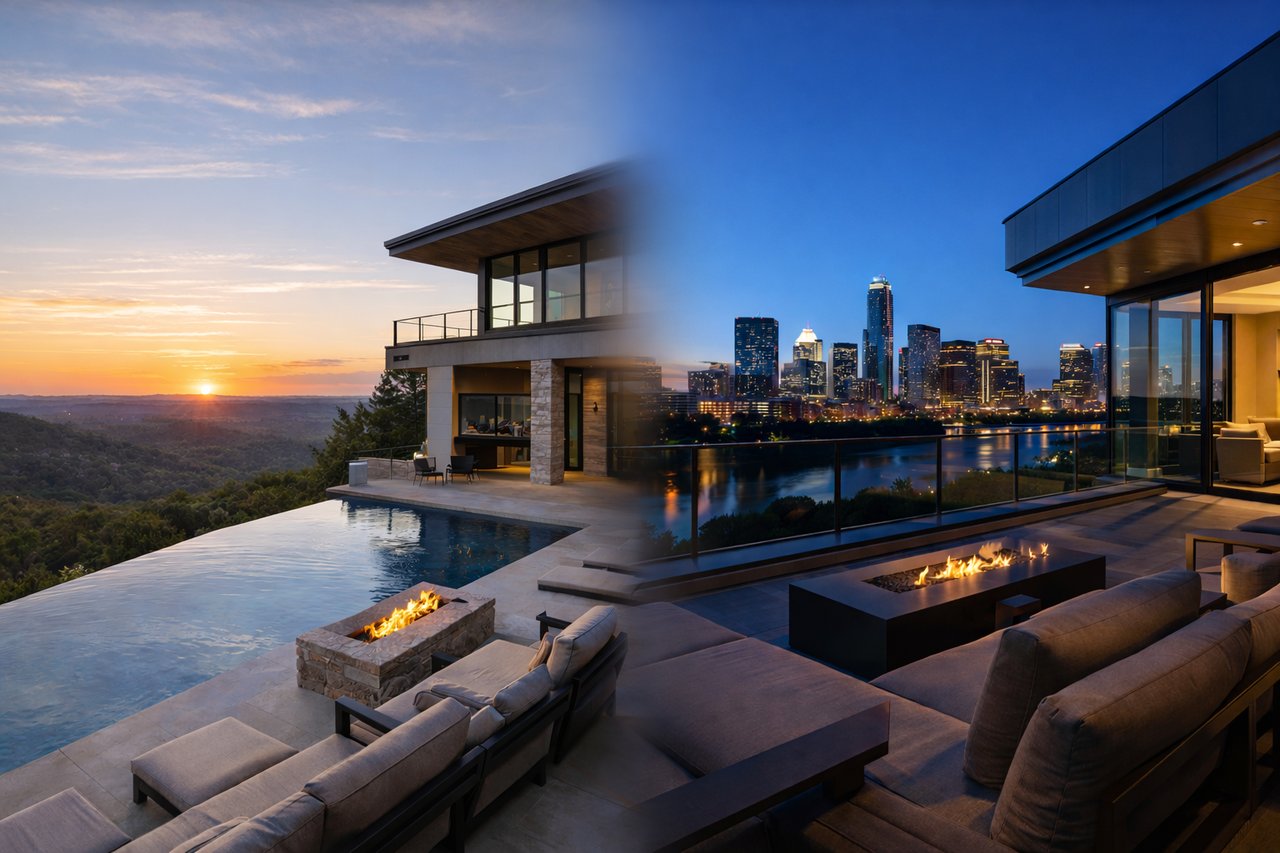
Do you go Hill Country, where cedar-draped ridgelines, private ranches, and starlit skies make every evening feel like a scene from a dream? Or do you choose Downtown, where sleek glass towers, rooftop pools, and the electric hum of urban energy put the best of everything at your doorstep?
There's no universally right answer here. But there's absolutely a right answer for you — and this guide is going to help you find it.
The Explosive Growth That Changed Everything
When Tesla, Oracle, and a wave of California tech transplants decided Austin was the place to be, the luxury market didn't just grow — it exploded. According to market data from the Austin Board of Realtors, luxury home sales (homes priced above $1 million) saw unprecedented demand starting around 2020 and haven't really slowed down since. What this means for buyers is that both Hill Country and Downtown properties are now legitimate luxury destinations with serious competition and serious price tags.
The scarcity that once kept Hill Country estates somewhat accessible has evaporated. Meanwhile, Downtown Austin's luxury high-rise inventory has expanded dramatically, with new towers rising along the Colorado River and around Lady Bird Lake that rival anything you'd find in New York or Miami.
What Makes Austin Luxury Different From Other Cities
Here's what's fascinating about Austin compared to, say, Los Angeles or Manhattan: you can genuinely have two completely different luxury experiences within 30 minutes of each other. In most major cities, luxury means dense urban living with maybe a penthouse or a home in a wealthy suburb. In Austin, you can have a 10-acre Hill Country ranch estate or a 4,000-square-foot penthouse overlooking Lady Bird Lake — both legitimately world-class, both legitimately Austin.
That dual identity is exactly why this decision deserves serious thought.
Understanding the Two Worlds of Austin Luxury Living
Before we dive into the nitty-gritty comparisons, it helps to understand what each of these experiences actually feels like on a day-to-day basis. Because buying a luxury home isn't just a financial transaction — it's buying into a lifestyle, a rhythm, a version of your daily life.
What Defines the Hill Country Experience
Picture waking up to the sound of nothing. No traffic, no sirens, no neighbors. Just the wind through juniper trees and maybe a family of white-tailed deer grazing below your bedroom window. That's Hill Country mornings. Neighborhoods like Westlake Hills, Rollingwood, Barton Creek, Lakeway, and the communities stretching toward Dripping Springs and Wimberley offer expansive properties with dramatic elevation changes, spring-fed swimming holes, and that intangible sense that you've somehow escaped from the world even though you're only 20 minutes from downtown.
Hill Country luxury is about acreage, architecture that embraces natural stone and native landscaping, and a pace of life that prioritizes peace over proximity.
What Defines the Downtown Skyline Experience
Now flip that entirely. Downtown Austin luxury means you are in the world — right at its beating center. It means stepping out of your building lobby and choosing between a dozen James Beard-nominated restaurants for dinner. It means watching live music spill out of venues on Sixth Street while you walk your rescue dog along the hike-and-bike trail. It means your "backyard" is Lady Bird Lake, and your commute to work might literally be an elevator ride.
Neighborhoods like the Second Street District, Rainey Street, South Congress, and the East Austin corridor have developed luxury residential options that put culture, cuisine, and connectivity at the absolute forefront of daily life.
Hill Country Luxury Homes: Living Among Nature's Masterpiece
The Architecture and Aesthetic of Hill Country Estates
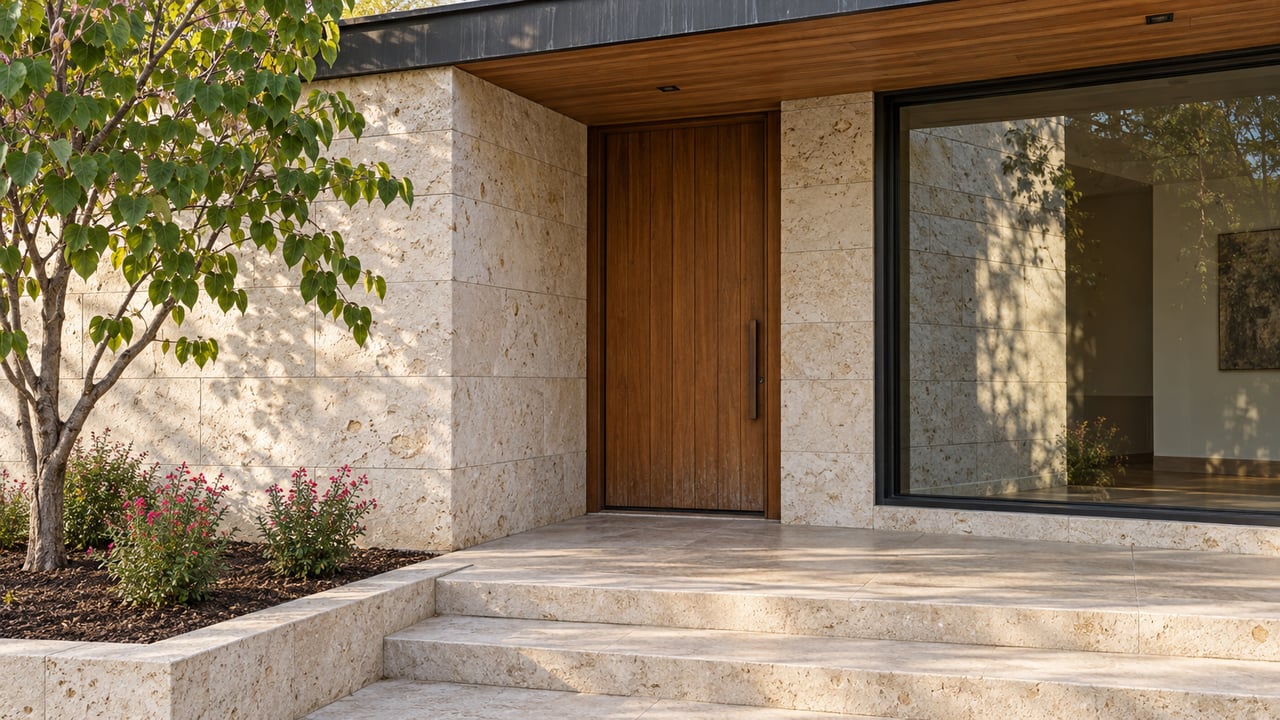
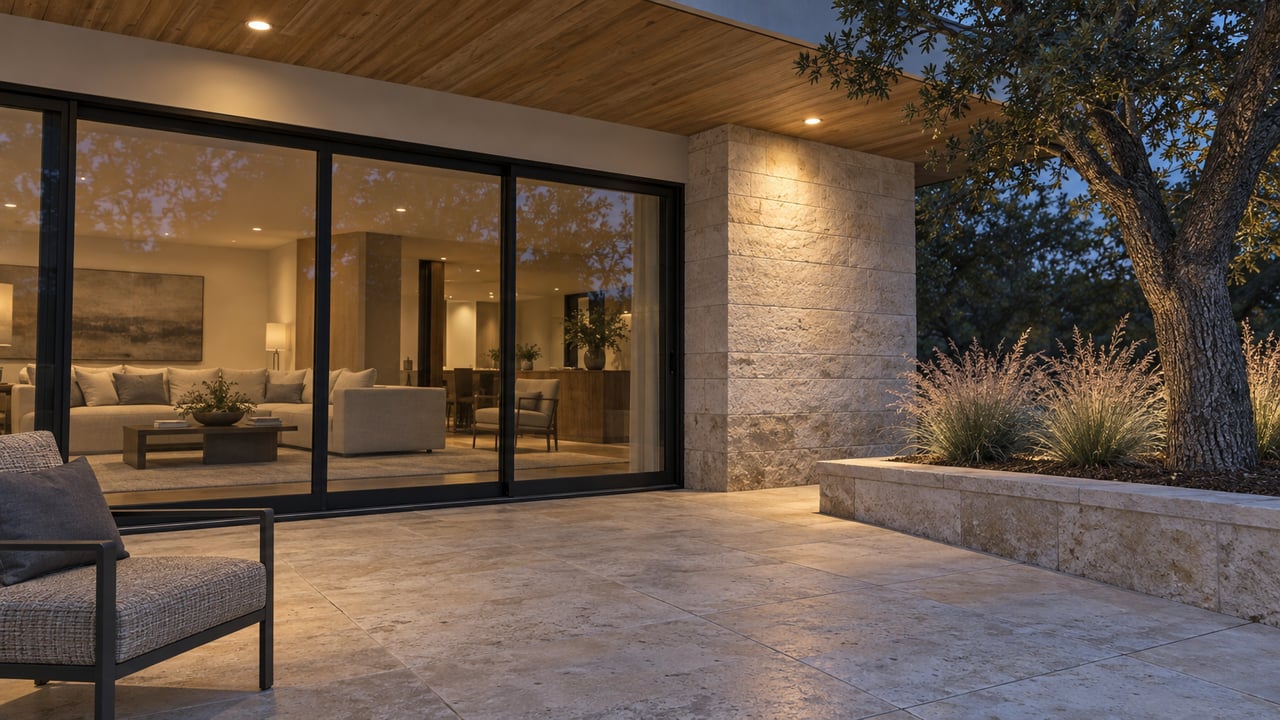
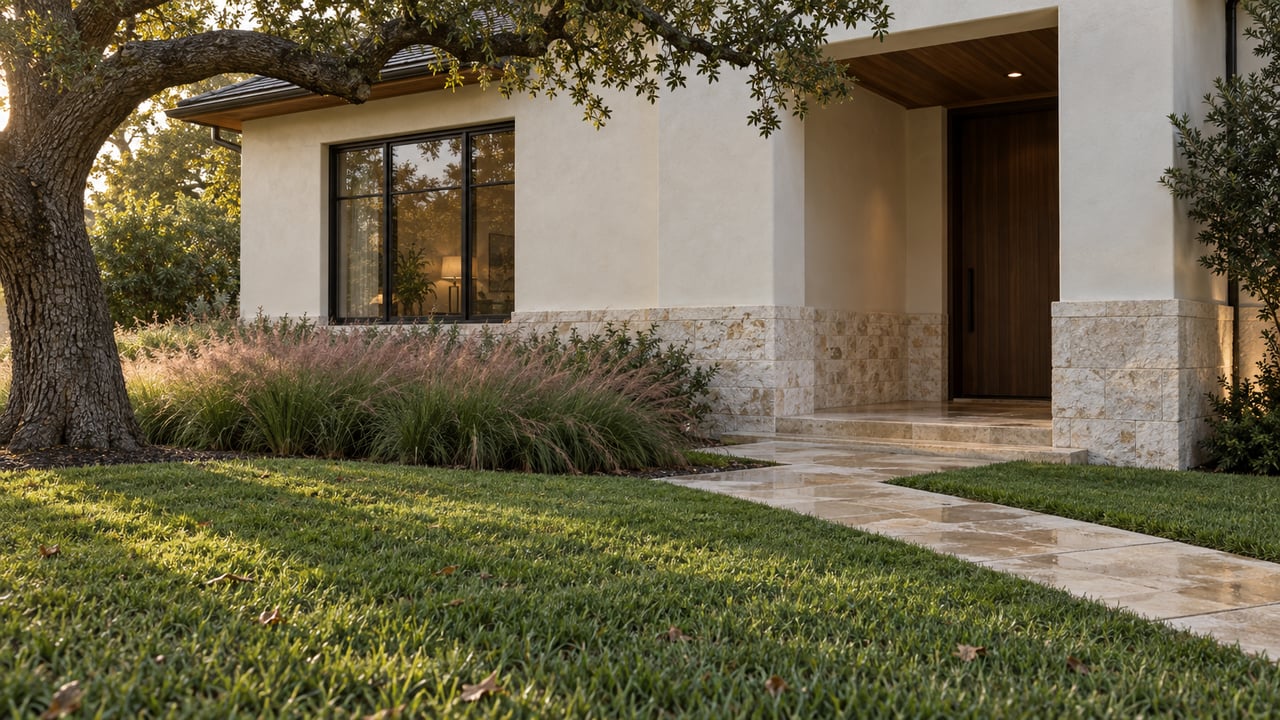
Hill Country luxury architecture has its own distinct language. We're talking about structures that work with the land rather than against it — homes built from native limestone, featuring metal roofs that patina beautifully over time, floor-to-ceiling windows that frame views like living paintings, and infinity pools that seem to spill right off the edge of a ridge.
Architects and custom builders in this region have become world-class at designing homes that feel simultaneously grand and organic. You'll find wine cellars carved into hillsides, outdoor kitchens that rival indoor ones, and guest casitas that would be someone else's primary residence. The aesthetic philosophy here is that luxury shouldn't shout — it should whisper with absolute confidence.
Privacy, Space, and the Freedom to Breathe
If there's one word that defines what Hill Country buyers are paying for, it's privacy. Not just privacy in the "tall fence" sense, but genuine, expansive, nobody-can-see-you-unless-they're-in-a-helicopter privacy. For high-profile executives, celebrities, and anyone who has spent years in dense urban environments, this kind of space is almost a physical relief.
Think about it this way: your Hill Country estate can have a private shooting range, a horse barn, a regulation tennis court, and still have room left over. That's not an exaggeration — that's Tuesday in the Westlake Hills zip code.
How Much Land Are We Really Talking About?
Entry-level Hill Country luxury typically starts at one to three acres. But the real estates — the ones that define what this region is capable of — often span 10, 20, or even 50+ acres. Properties in the Barton Creek neighborhood, for example, frequently sit on golf course lots with protected greenbelt views, while ranches farther west near Bee Cave and Spicewood can offer true working ranch scale with luxury finishes throughout.
Downtown Austin Luxury: Where Energy Meets Elegance
High-Rise Living and Its Unique Advantages
Downtown Austin's luxury high-rise market has come into its own in a serious way. Buildings like The Independent (affectionately nicknamed "The Jenga Tower" for its stacked asymmetrical design), 70 Rainey, The Austonian, and W Austin Residences have set a new standard for what urban luxury means in this city.
These aren't just condos with good views. We're talking about full concierge services, private wine storage, rooftop pools with panoramic city and lake views, state-of-the-art fitness centers, and building amenities that function more like a five-star hotel than an apartment complex. The views from upper floors on a clear day — watching the Colorado River wind through the city with the Hill Country in the distance — are genuinely breathtaking in their own right.
Walkability and the Urban Lifestyle Premium
Here's something that Downtown buyers understand intuitively: time is the ultimate luxury. And when your home puts everything within walking distance, you're buying back hours of your week that would otherwise be spent in a car. Austin's walkability scores have improved dramatically in the urban core, and for someone who wants to fully participate in the city's cultural life — the restaurants, the music, the arts, the tech scene — Downtown living essentially removes friction from every part of your day.
The restaurant scene alone could justify the premium. Within a few blocks of most Downtown luxury buildings, you'll find everything from Joel Robuchon-trained chefs to the city's most-celebrated taco trucks operating side by side. That kind of access doesn't exist in Westlake Hills, no matter how beautiful the view.
The Condo vs. Urban Estate Debate Downtown
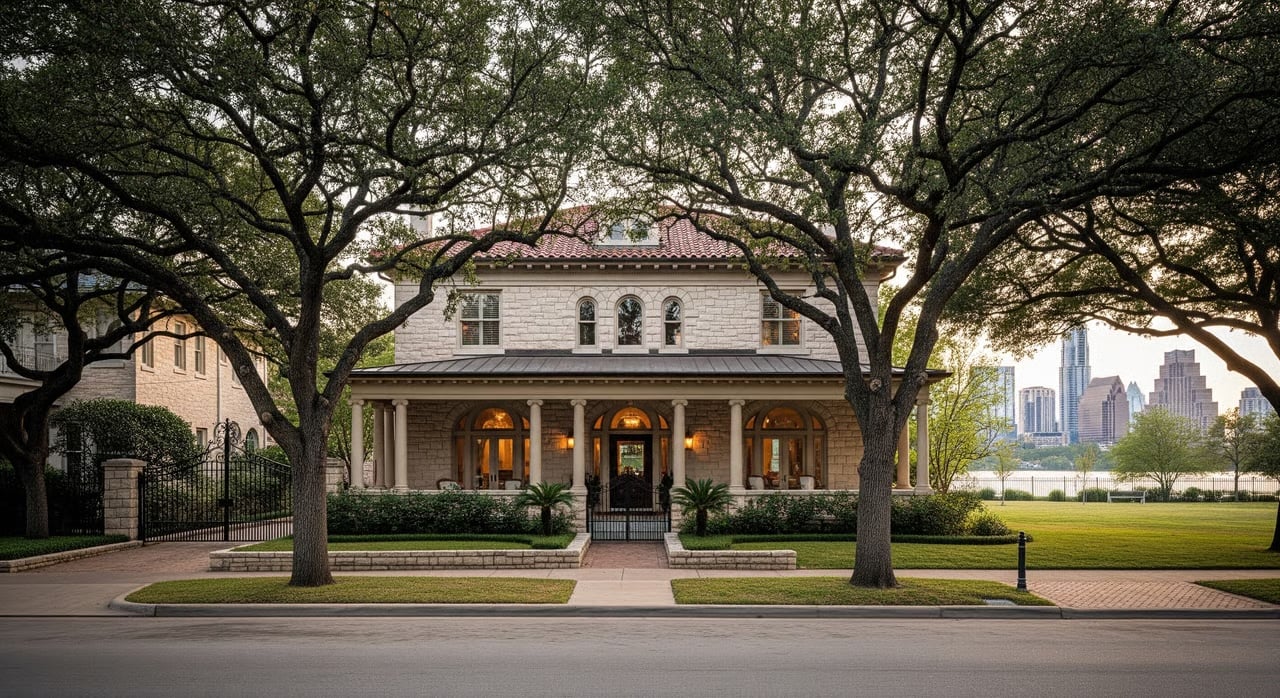
It's worth noting that "Downtown luxury" isn't monolithic. There's the high-rise condo experience, but there's also a growing market for what we might call urban estate living — larger single-family homes in neighborhoods like Travis Heights, Bouldin Creek, and Clarksville that sit close enough to Downtown to enjoy its energy but offer more traditional home ownership characteristics like private yards, garages, and greater architectural individuality.
Comparing the Investment Value: Hill Country vs. Downtown
Appreciation Trends You Should Know About
Both markets have appreciated significantly, but the patterns are different. Hill Country properties — particularly those in Westlake Hills and Barton Creek — have shown exceptional long-term appreciation, partly because of geographic constraints. There's only so much elevated, view-oriented land available, and once it's developed, it's gone. That scarcity premium is real and it compounds over time.
Downtown properties, particularly newer high-rise units, have shown strong appreciation as well, though they're more sensitive to inventory fluctuations as new towers are completed. The key insight here is that land-constrained Hill Country properties may offer more durable appreciation over the long term, while Downtown properties offer liquidity advantages — they tend to sell more quickly when you need to exit the market.
Rental Income Potential in Both Markets
If investment potential is part of your consideration (and for luxury buyers, it often is), Downtown properties have a meaningful advantage in the short-term rental market. Austin's status as a premier convention city, music festival destination, and corporate hub creates consistent demand for luxury short-term rentals, and a Downtown penthouse can command extraordinary nightly rates during events like SXSW, Austin City Limits, and Formula 1 at COTA.
Hill Country properties can also perform well as luxury vacation rentals — particularly larger estates marketed to corporate retreats and family reunions — but the management complexity is considerably higher.
Lifestyle Considerations That Should Drive Your Decision
Family Life in the Hill Country
For families with children, the Hill Country option often wins on purely practical grounds. The school districts anchored around Westlake Hills — particularly Eanes Independent School District — are consistently ranked among the best in Texas and the nation. Add in the outdoor lifestyle, the space for kids to actually run around, the lower traffic density, and the sense of community that develops in these neighborhoods, and you've got a compelling package for parents.
There's also something to be said for raising children with nature as their backyard. Swimming holes, hiking trails, stargazing without light pollution — these experiences shape kids in ways that no amount of urban cultural access quite replicates.
The Professional's Case for Downtown Living
On the flip side, if you're a professional whose career puts you at the center of Austin's technology, creative, or business ecosystems, the Downtown calculus changes entirely. The ability to walk to networking events, maintain relationships through spontaneous coffee meetings, and participate in the city's professional culture without ever getting in a car has real career value.
For the single professional, the newly-arrived executive, or the empty-nester ready to trade their yard for a view, Downtown luxury living isn't just convenient — it's energizing in a way that suburban life simply cannot match.
The Hidden Costs Nobody Talks About
Let's talk about something that doesn't make it into most real estate brochures: the hidden costs of each lifestyle choice. Hill Country estates come with property maintenance costs that can be staggering — we're talking about pool maintenance, landscaping across multiple acres, deer-fencing, septic systems, well maintenance, generator systems (because outages happen), and the general upkeep of a property that's essentially its own small ecosystem.
Downtown luxury, meanwhile, comes with HOA fees that can range from a few hundred to several thousand dollars per month in high-end buildings — fees that cover amenities and services but also represent a perpetual ongoing cost. Parking (yes, even in luxury buildings) can be an additional expense, and the square footage you get per dollar is considerably less than what you'd find in the Hill Country.
Neither set of costs is inherently prohibitive at the luxury level, but knowing about them going in helps you make a genuinely informed decision.
Which Location Attracts Which Type of Buyer?
Through years of market observation, certain buyer profiles have emerged for each location. Hill Country luxury tends to attract established executives and entrepreneurs who've "made it" and want space, privacy, and permanence. It draws families with school-age children, outdoor enthusiasts, and buyers relocating from other high-cost markets who want their dollar to go further in terms of land and square footage.
Downtown luxury attracts a different energy — younger affluent professionals, tech workers at the peak of their careers, international buyers looking for a pied-à-terre, and urban lifestyle devotees who would feel claustrophobic the moment the city's heartbeat faded.
Knowing which profile resonates with you is probably 80% of the decision right there.
Making the Final Call: Questions to Ask Yourself
Before you sign anything, run yourself through these questions honestly:
How do you want to spend a typical Saturday morning? If the answer involves a farmers market, a brunch spot you can walk to, and maybe a museum or gallery in the afternoon — Downtown is calling. If the answer involves coffee on a quiet porch watching deer, a trail run through cedar breaks, and an afternoon by the pool — Hill Country is your answer.
How important is your commute? Hill Country living in Austin's traffic can mean 45-minute drives that should theoretically take 15 minutes. Downtown eliminates commute anxiety almost entirely.
Do you prioritize space or access? This is the fundamental trade-off, and there's no wrong answer — just an honest one.
What's your five-year vision? Are you planning to grow your family, or is this a lifestyle investment for the version of yourself you're building right now?
Conclusion
Choosing between Hill Country views and a Downtown Austin skyline isn't really a real estate decision — it's a life decision. Both options represent world-class luxury at its finest, each with its own poetry and its own trade-offs. The Hill Country offers you land, silence, nature's grandeur, and the soul-deep satisfaction of a home that feels like a personal sanctuary. Downtown offers you connection, energy, culture, and the thrill of living at the center of one of America's most exciting cities.
The good news? Austin is one of the few cities in the world where both options genuinely exist at the highest level. The better news is that you're not choosing between good and bad — you're choosing between two extraordinary visions of what your life could look like. Take that seriously, visit both, spend a weekend in each, and trust your gut when it speaks.
Because in Austin, your home should be as extraordinary as the life you're building here.
FAQs
1. What is the average price of a luxury home in Austin's Hill Country? Luxury Hill Country homes in the Westlake Hills and Barton Creek areas typically start around $1.5 million and can exceed $15–20 million for large estates with significant acreage and premium finishes. The price per square foot varies widely depending on land size and view quality.
2. Are Downtown Austin luxury condos a good investment compared to Hill Country estates? Both can be excellent investments, but for different reasons. Downtown condos tend to offer better liquidity and strong short-term rental income potential, while Hill Country estates offer more durable long-term appreciation driven by land scarcity. The right choice depends on your investment timeline and goals.
3. Which Austin neighborhoods are considered the best for Hill Country luxury living? Westlake Hills, Rollingwood, Barton Creek, Bee Cave, Lakeway, and the communities around Dripping Springs and Wimberley are considered premier Hill Country luxury destinations. Each offers a slightly different character, price point, and proximity to Downtown.
4. How does Austin's traffic affect the Hill Country vs. Downtown decision? Significantly. During peak hours, what looks like a 15-minute drive from Westlake Hills to Downtown can stretch to 45 minutes or more on Mopac or Loop 360. Downtown residents largely avoid this stress, while Hill Country buyers often plan their schedules around traffic patterns or work remotely.
5. Can I find luxury properties that offer both Hill Country character and Downtown convenience? Yes, neighborhoods like Travis Heights, Barton Hills, and South Congress sit in a middle ground that offers some Hill Country aesthetic and proximity to nature while remaining very close to Downtown Austin. These areas are increasingly popular with buyers who want the best of both worlds without fully committing to either extreme.